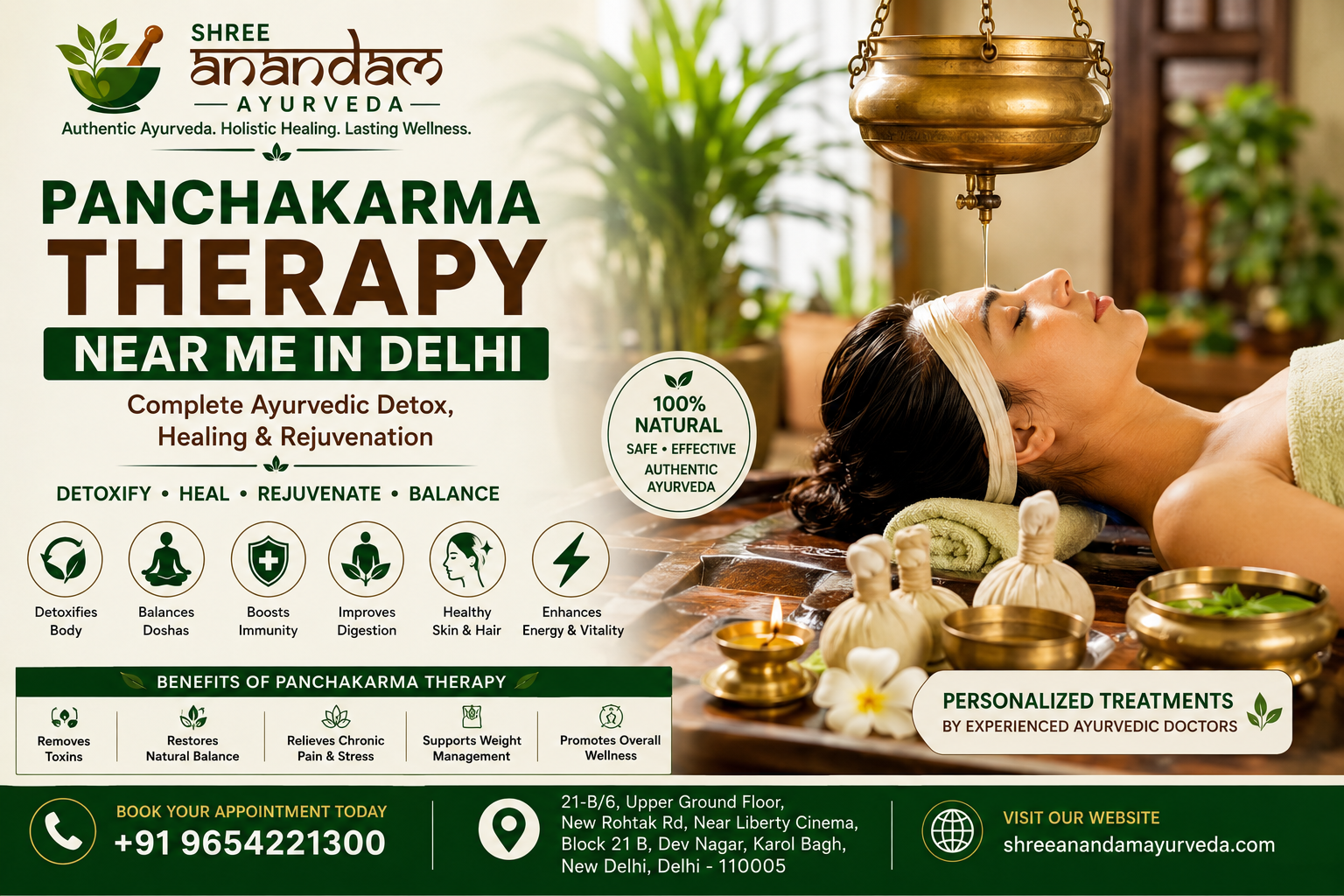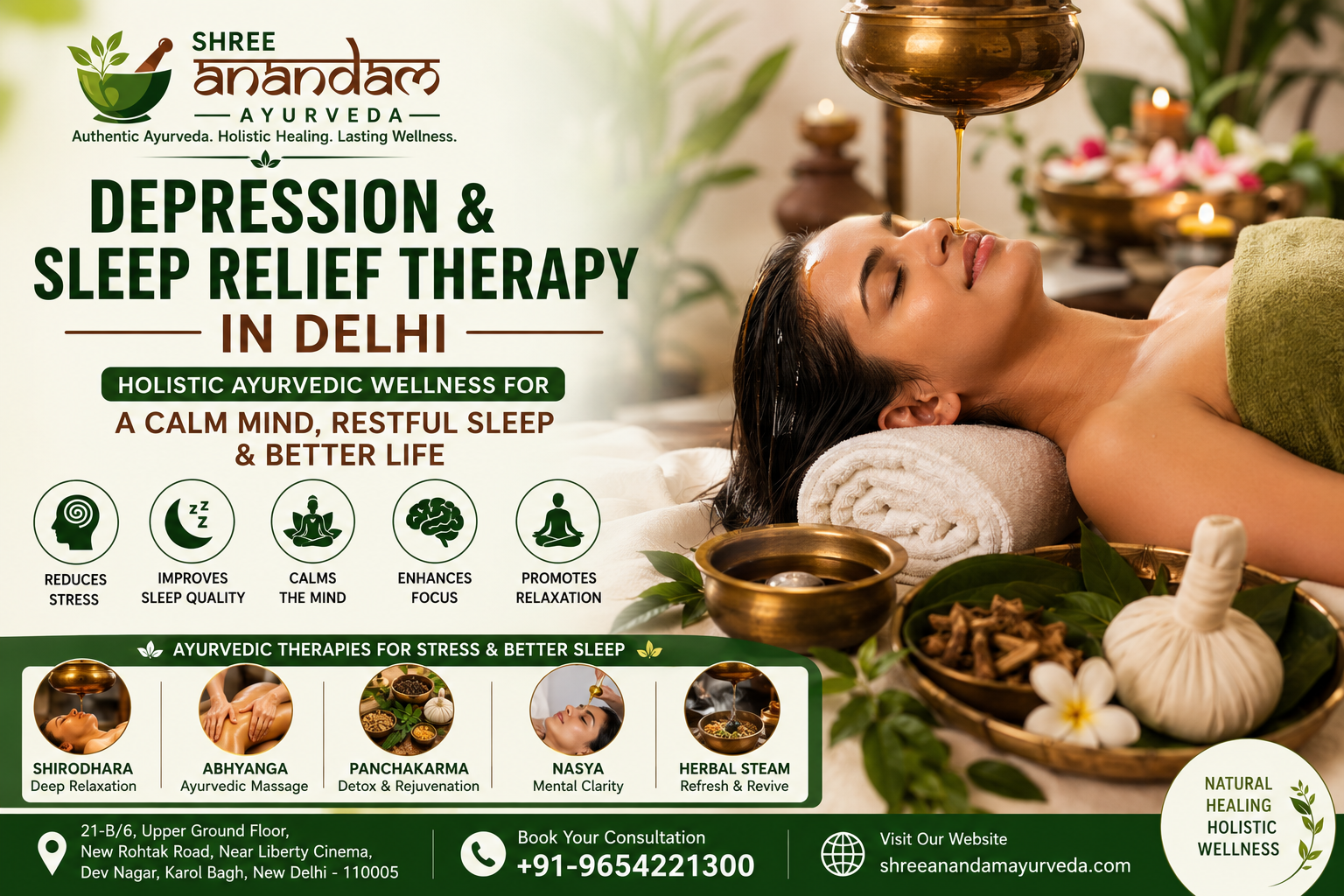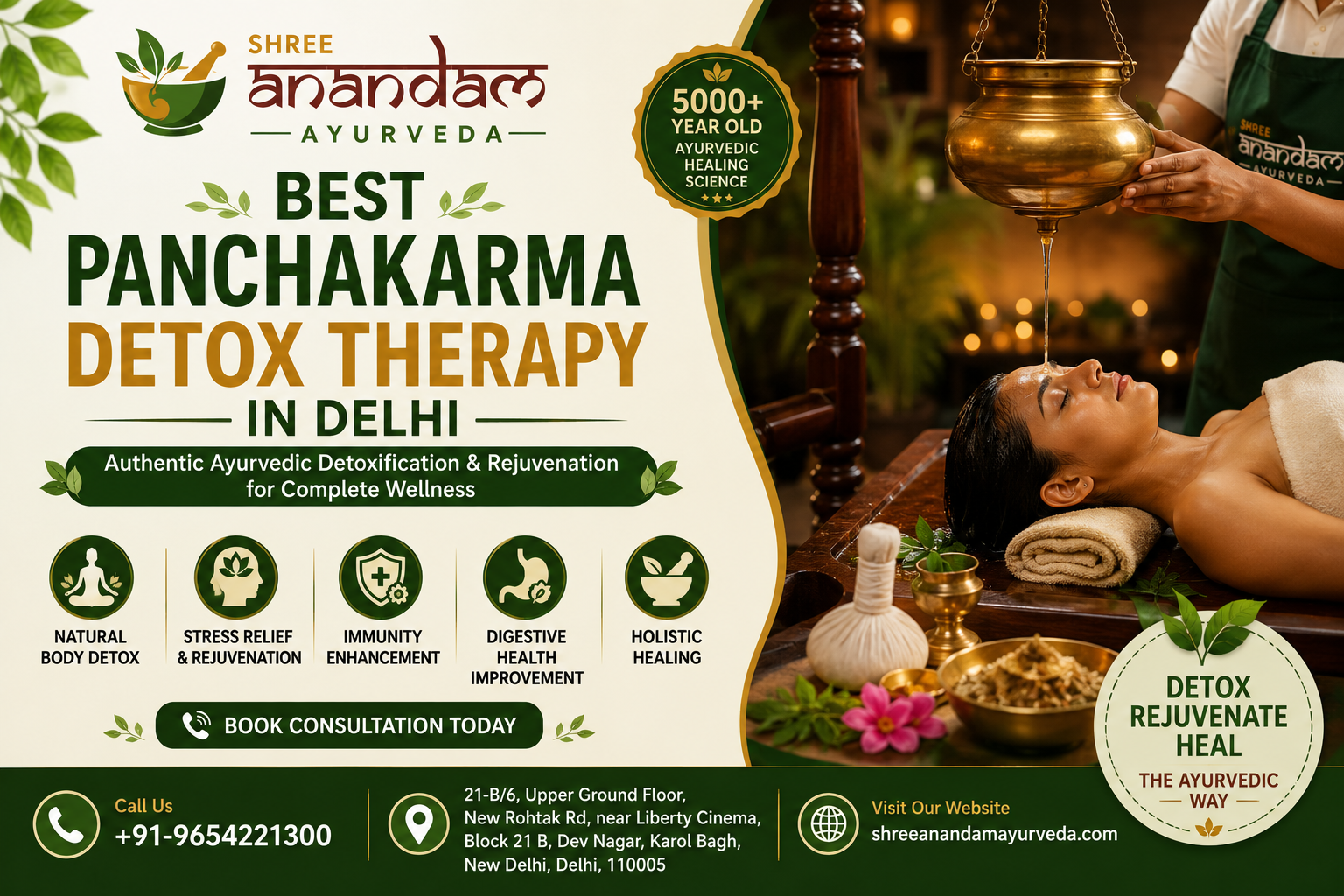
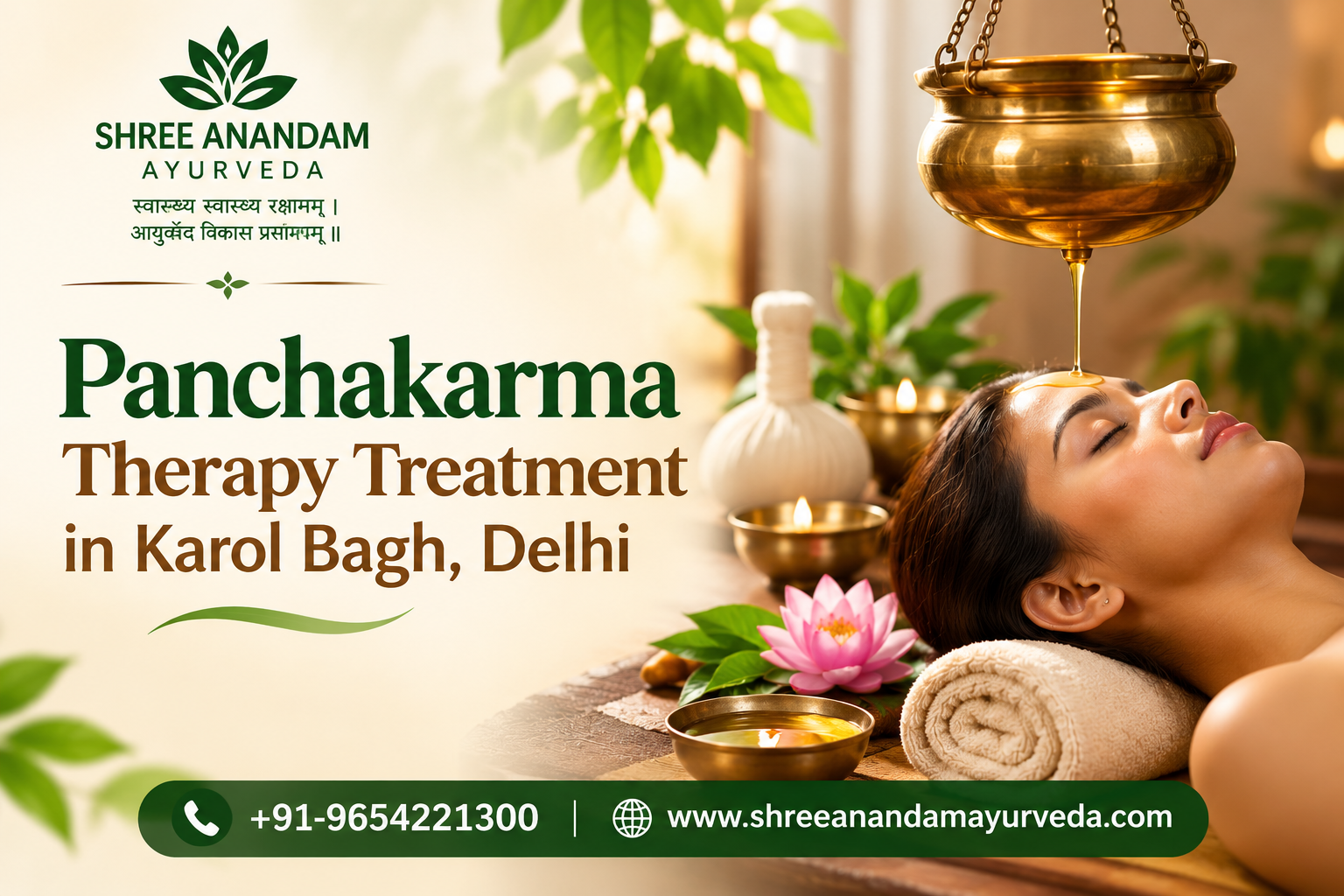
Looking for Panchakarma therapy treatment in Karol Bagh, Delhi? Shree Anandam Ayurveda is an Ayurvedic clinic located in Dev Nagar, Karol Bagh, offering traditional Panchakarma therapies, Shirodhara, Abhyanga and personalized Ayurvedic wellness guidance. Its Panchakarma services include traditional procedures such as Vamana, Virechana, Basti and Nasya, selected according to individual assessment and suitability.
Panchakarma is a structured system of traditional Ayurvedic procedures. It is not a one-size-fits-all detox or a routine massage. The appropriate treatment depends on an individual’s health history, current condition, age, strength and professional assessment. At Shree Anandam Ayurveda, people can consult the Ayurvedic team to understand which therapies may be appropriate for their needs.
Clinic: Shree Anandam Ayurveda
Location: Karol Bagh, New Delhi
Consultation: +91-9654221300
Official website: https://www.shreeanandamayurveda.com/
Panchakarma service page:https://www.shreeanandamayurveda.com/panchakarma-treatment
Quick Answer: Where Can You Find Panchakarma Therapy in Karol Bagh, Delhi?
Shree Anandam Ayurveda is one option for people looking for traditional Panchakarma therapy in Karol Bagh, Delhi. The clinic is located at 21-B/6, Upper Ground Floor, New Rohtak Road, near Liberty Cinema, Dev Nagar, Karol Bagh, New Delhi – 110005.
The clinic lists Panchakarma and Shirodhara treatment, Ayurvedic Abhyanga massage and other wellness services. Prospective patients should book a consultation before starting treatment because not every Panchakarma procedure is suitable for every individual.
What Is Panchakarma Therapy in Ayurveda?
Panchakarma is a traditional Ayurvedic therapeutic system. The Sanskrit term is commonly translated as “five actions” or “five procedures.” In classical Ayurveda, these procedures are used within a structured approach to managing specific doshic imbalances.
Unlike a standard body massage or a general wellness detox, Panchakarma may involve preparation, selected therapeutic procedures and post-treatment dietary and lifestyle guidance.
The five principal procedures traditionally associated with Panchakarma are:
- Vamana: Therapeutic emesis under professional supervision.
- Virechana: Therapeutic purgation under professional supervision.
- Basti: An Ayurvedic enema-based procedure.
- Nasya: Administration of selected substances through the nasal route.
- Raktamokshana: A specialized traditional bloodletting procedure used in selected circumstances.
Not every person needs all five procedures. The selection must be based on an appropriate assessment by a qualified practitioner.
The Directorate of AYUSH, Government of NCT of Delhi, also describes Panchakarma as a system involving traditional procedures such as massage, oil applications, nasal administration and other selected therapies.
Why Consider Shree Anandam Ayurveda for Panchakarma in Karol Bagh?
Choosing a Panchakarma centre requires more than finding a nearby clinic. It is important to understand the practitioner’s qualifications, treatment process, hygiene standards, suitability assessment and follow-up guidance.
Shree Anandam Ayurveda provides information about its Panchakarma services, clinic location and contact details on its official website.
1. NABH Accreditation for Panchakarma Services
Shree Anandam Ayurveda has a Panchakarma clinic accreditation certificate issued by the National Accreditation Board for Hospitals & Healthcare Providers (NABH).
The published certificate identifies:
- Certificate number: PC-2024-0102
- Accredited facility: Shree Anandam Ayurveda
- Scope: Panchakarma
- Validity: 25 June 2024 to 24 June 2027
- Location: New Rohtak Road, Karol Bagh, Central Delhi
This is a useful credential for patients evaluating a Panchakarma facility. Patients can also ask the clinic to confirm the current accreditation status and scope when booking.
2. Personalized Ayurvedic Consultation
Panchakarma should not be selected only because a particular therapy is popular. The individual’s health concerns, medical history, lifestyle and suitability need to be considered before treatment.
A consultation can help establish whether a particular procedure is appropriate or whether another approach is more suitable.
3. Traditional Panchakarma Procedures
The clinic’s Panchakarma service information describes procedures such as Vamana, Virechana, Basti, Nasya and Shirodhara.
These procedures have different methods and purposes within traditional Ayurveda. They should not be considered interchangeable.
4. Convenient Karol Bagh Location
The clinic is located near Liberty Cinema on New Rohtak Road in Dev Nagar, Karol Bagh. Its location may be convenient for people travelling from nearby Central Delhi areas.
5. Ayurveda-Led Wellness Guidance
Alongside selected therapies, Ayurvedic care may include guidance about daily routines, food habits, rest and lifestyle practices. Recommendations should be appropriate to the person’s individual needs.
Five Traditional Panchakarma Procedures Explained
1. Vamana Therapy – Traditional Therapeutic Emesis
Vamana is a classical Panchakarma procedure involving supervised therapeutic emesis. In traditional Ayurvedic practice, it is associated with the management of selected Kapha-related conditions.
It is a specialized procedure and should never be attempted at home.
What does the procedure involve?
Depending on the practitioner’s assessment and the treatment protocol, the process may involve:
- Initial consultation and suitability assessment.
- Preparatory measures when indicated.
- A supervised procedure in an appropriate clinical setting.
- Observation and post-procedure dietary guidance.
Important: Vamana is not suitable for everyone. It can involve risks such as dehydration, electrolyte disturbances and other complications. It requires careful professional assessment and supervision.
2. Virechana Therapy – Traditional Therapeutic Purgation
Virechana is a traditional Ayurvedic procedure involving therapeutic purgation. Classical Ayurveda associates it with selected Pitta-related imbalances.
The procedure should be planned according to the individual’s condition and tolerance.
The treatment process may include:
- Ayurvedic consultation.
- Assessment of suitability.
- Preparatory procedures, if indicated.
- Supervised administration of the selected treatment.
- Post-treatment diet and recovery guidance.
Virechana should not be confused with ordinary laxative use or self-directed bowel cleansing. It may not be appropriate for people with dehydration, certain digestive conditions, pregnancy or other medical concerns.
3. Basti Therapy – Traditional Ayurvedic Enema Treatment
Basti is an important procedure in classical Panchakarma and involves the administration of selected substances through the rectal route.
Traditional Ayurveda associates Basti with Vata management.
Different forms of Basti may be used depending on the Ayurvedic treatment plan. The selection, preparation and administration require professional supervision.
What should patients understand?
- Basti is a therapeutic procedure, not a routine home enema.
- The formulation and method must be selected appropriately.
- Medical history and current symptoms should be discussed before treatment.
- Hygiene, proper equipment and professional supervision are essential.
4. Nasya Therapy – Traditional Nasal Administration
Nasya is a traditional Ayurvedic procedure involving the administration of selected substances through the nasal route.
It is traditionally associated with Ayurvedic care for the head and neck region.
The procedure may involve:
- An assessment before treatment.
- Selection of a suitable substance.
- Appropriate positioning and preparation.
- Administration according to the prescribed protocol.
- Post-procedure instructions.
Nasya is not suitable for every person or every nasal or respiratory complaint. People with acute illness or relevant medical conditions should seek professional advice before considering it.
5. Raktamokshana – Specialized Traditional Procedure
Raktamokshana is a specialized procedure described in classical Ayurveda. It involves traditional bloodletting methods in selected circumstances.
It should only be considered by appropriately qualified professionals in a suitable clinical setting, with strict attention to infection prevention, patient safety and applicable clinical standards.
It is not a routine wellness treatment and is not necessary for every Panchakarma patient.
Panchakarma vs Shirodhara vs Abhyanga: What Is the Difference?
People searching for Ayurvedic therapy in Karol Bagh may come across Panchakarma, Shirodhara and Abhyanga. Although all are associated with Ayurveda, they are different types of procedures.
| Therapy | Traditional description | Main consideration |
|---|---|---|
| Panchakarma | A structured system of selected Ayurvedic procedures | Requires individual assessment and planning |
| Shirodhara | A suitable liquid is poured in a continuous stream over the forehead | Often included in relaxation-oriented Ayurvedic programs |
| Abhyanga | Traditional Ayurvedic oil massage | Selected according to individual needs and suitability |
| Virechana | Therapeutic purgation | Requires professional supervision |
| Basti | Ayurvedic enema-based procedure | Requires appropriate assessment and administration |
| Nasya | Traditional nasal administration | Depends on individual suitability |
Which one should you choose?
There is no universal answer. A person seeking relaxation may be interested in understanding Shirodhara or Abhyanga, whereas a structured Panchakarma program may involve different procedures. The appropriate choice should be made after consultation rather than selecting a treatment based on an online description alone.
What Happens During a Panchakarma Treatment Program?
Panchakarma is generally described in three broad stages: Purva Karma, Pradhana Karma and Paschat Karma.
Stage 1: Purva Karma – Preparation
Purva Karma refers to preparatory procedures that may be recommended before selected main therapies.
Depending on the treatment plan, these may include:
- Snehana: Traditional oil-based preparation.
- Swedana: Selected sweating or fomentation procedures.
- Dietary and lifestyle instructions.
- Preparation based on individual assessment.
Not every preparatory procedure is required for every patient.
Stage 2: Pradhana Karma – Main Procedure
This stage involves the selected therapeutic procedure. The practitioner decides which procedure, if any, is appropriate.
Possible procedures in classical Panchakarma include Vamana, Virechana, Basti, Nasya and Raktamokshana.
These procedures have different requirements and safety considerations. They should not be combined automatically into one standard package.
Stage 3: Paschat Karma – Post-Treatment Care
Post-treatment care is an important part of the traditional Panchakarma approach.
It may involve:
- Gradual dietary guidance.
- Rest and activity recommendations.
- Instructions about daily routines.
- Follow-up consultation.
- Advice about returning to regular food habits.
Patients should follow the instructions provided by their practitioner and contact the clinic if they experience unexpected symptoms.
Who May Consider Panchakarma Therapy?
People interested in traditional Ayurvedic therapeutic procedures may consult an Ayurvedic practitioner to understand whether Panchakarma is appropriate.
A consultation may be relevant for individuals who:
- Want to understand traditional Ayurvedic cleansing procedures.
- Are exploring an individualized Ayurvedic wellness plan.
- Want professional guidance about selected Panchakarma therapies.
- Are interested in traditional rejuvenation and lifestyle practices.
- Want to understand the differences between Panchakarma, Shirodhara and Abhyanga.
Panchakarma should not be promoted as a guaranteed treatment for chronic disease, infertility, obesity, diabetes, liver disease or any other medical condition.
Who Should Avoid or Seek Medical Advice Before Panchakarma?
Panchakarma is not suitable for everyone. Certain procedures can be physically demanding and may carry risks.
A person should disclose their health history and seek appropriate medical advice before treatment, particularly if they:
- Are pregnant or breastfeeding.
- Are elderly, frail or physically debilitated.
- Have fever, an acute infection or an active illness.
- Have significant dehydration or nutritional deficiencies.
- Have serious heart, kidney, liver or gastrointestinal conditions.
- Have bleeding disorders or take blood-thinning medicines.
- Have recently undergone surgery.
- Have an unexplained or worsening medical symptom.
The suitability of each procedure must be assessed individually. Do not stop prescribed medication or postpone necessary medical treatment to undergo Panchakarma.
How to Choose the Best Panchakarma Centre in Karol Bagh, Delhi
Before booking a Panchakarma treatment, consider the following factors:
| Selection factor | What to check |
|---|---|
| Practitioner qualifications | Relevant Ayurvedic qualifications and clinical experience |
| Accreditation | Current accreditation and its exact scope |
| Initial consultation | Whether a proper health assessment is performed |
| Treatment selection | Whether procedures are individualized |
| Hygiene | Clean treatment rooms, equipment and linen |
| Supervision | Appropriate professional supervision during procedures |
| Transparency | Clear information about procedures, fees and possible risks |
| Follow-up | Post-treatment instructions and access to consultation |
| Patient safety | Screening for contraindications and medical conditions |
A clinic should be willing to explain why a procedure is being recommended, what it involves, what risks may exist and what alternatives are available.
Why Choose a Panchakarma Clinic in Karol Bagh?
Karol Bagh is a well-connected part of Central Delhi. People looking for Ayurvedic treatment in this area may also travel from nearby localities.
Shree Anandam Ayurveda’s location is:
21-B/6, Upper Ground Floor, New Rohtak Road, Near Liberty Cinema, Block 21 B, Dev Nagar, Karol Bagh, New Delhi, Delhi – 110005.
Nearby areas include:
- Dev Nagar
- Karol Bagh
- Rajendra Nagar
- Rajendra Place
- Patel Nagar
- Prasad Nagar
- Jhandewalan
- Pusa Road
People searching for Panchakarma treatment near Karol Bagh, Ayurvedic clinic near Liberty Cinema or Ayurvedic therapy in Central Delhi can contact the clinic to confirm appointment availability and treatment details.
Panchakarma Treatment Cost in Karol Bagh, Delhi
The cost of Panchakarma treatment can vary according to the procedure, duration, number of sessions, medicines, preparation requirements and follow-up care.
For example, a consultation, Abhyanga session, Shirodhara session and a structured Panchakarma program are different services and may have different charges.
Before booking, ask the clinic:
- What is the consultation fee?
- Which specific procedure is being recommended?
- How many sessions are proposed?
- Are medicines and preparatory procedures included?
- Are follow-up consultations included?
- What is the total estimated cost?
- What are the possible risks and alternatives?
For the latest Panchakarma treatment fees at Shree Anandam Ayurveda, contact +91-9654221300. The clinic should confirm current charges directly rather than relying on outdated online prices.
About Shree Anandam Ayurveda, Karol Bagh, Delhi
Shree Anandam Ayurveda is an Ayurvedic clinic and Panchakarma centre located in Dev Nagar, Karol Bagh, New Delhi.
The clinic’s website identifies Vaidya Sanghamitra Dash as its Founder and Chief Ayurveda Consultant. The clinic publishes information about its Ayurvedic therapies, Panchakarma services and wellness approach.
Clinic Information
| Detail | Information |
|---|---|
| Clinic name | Shree Anandam Ayurveda |
| Main service | Panchakarma and Ayurvedic care |
| Location | Karol Bagh, New Delhi |
| Address | 21-B/6, Upper Ground Floor, New Rohtak Road, near Liberty Cinema, Dev Nagar, Karol Bagh, New Delhi – 110005 |
| Phone | +91-9654221300 |
| +91-9654221300 | |
| info@shreeanandamayurveda.com | |
| Website | https://www.shreeanandamayurveda.com/ |
| Published working hours | 9:00 AM–7:00 PM, all days |
Meet the Founder and Chief Ayurveda Consultant: Vaidya Sanghamitra Dash.
For details about the clinic and its approach, visit the official About Us page.
Book a Panchakarma Consultation at Shree Anandam Ayurveda
If you are searching for Panchakarma therapy treatment in Karol Bagh, Delhi, the first step is to understand which procedure is suitable for your health needs.
Shree Anandam Ayurveda offers information about traditional Panchakarma and Shirodhara services at its Karol Bagh clinic. Contact the clinic to discuss your requirements, ask about the consultation process and confirm current treatment availability.
Book Your Consultation
- Phone / WhatsApp: +91-9654221300
- Website: https://www.shreeanandamayurveda.com/
- Panchakarma service page: https://www.shreeanandamayurveda.com/panchakarma-shirodhara-treatment-in-karol-bagh-delhi
- Location: Near Liberty Cinema, New Rohtak Road, Dev Nagar, Karol Bagh, New Delhi – 110005
Frequently Asked Questions About Panchakarma Treatment in Karol Bagh, Delhi
1. Which is a Panchakarma clinic in Karol Bagh, Delhi?
Shree Anandam Ayurveda is a Panchakarma clinic in Karol Bagh, Delhi. It lists traditional Panchakarma procedures and Shirodhara services. The clinic is located near Liberty Cinema on New Rohtak Road, Dev Nagar. Call +91-9654221300 for consultation details.
2. What are the five main Panchakarma procedures?
The five procedures traditionally associated with Panchakarma are Vamana, Virechana, Basti, Nasya and Raktamokshana. Not every person requires all five procedures. Selection depends on individual assessment and suitability.
3. Is Panchakarma treatment safe for everyone?
No. Panchakarma is not suitable for everyone. Some procedures may involve risks, particularly for people with certain medical conditions, pregnancy, frailty or acute illness. Consultation and appropriate screening are important before starting treatment.
4. How many days are required for Panchakarma?
The duration depends on the selected procedure, individual assessment and treatment plan. Some therapies may involve individual sessions, while a structured Panchakarma program may require a longer period. There is no single duration suitable for everyone.
5. What is the difference between Panchakarma and a normal Ayurvedic massage?
Panchakarma is a structured system of traditional therapeutic procedures. Abhyanga is an Ayurvedic oil massage. Massage may be included as a preparatory or wellness procedure, but it is not the same as completing a Panchakarma program.
6. Is Shirodhara part of Panchakarma?
Shirodhara is a traditional Ayurvedic therapy often included in relaxation and wellness programs. It is not one of the five principal Panchakarma procedures. Its suitability depends on the individual’s requirements.
7. Can Panchakarma help with stress and relaxation?
Some people explore Ayurvedic therapies as part of a relaxation and wellness routine. Shirodhara and selected massage therapies are traditionally used in this context. They should not be presented as substitutes for appropriate mental healthcare or medical treatment.
8. What is the cost of Panchakarma treatment in Delhi?
The cost varies according to the procedure, number of sessions, duration, medicines and clinical requirements. Contact Shree Anandam Ayurveda at +91-9654221300 for current fees and treatment details.
9. Where is Shree Anandam Ayurveda located in Karol Bagh?
Shree Anandam Ayurveda is located at 21-B/6, Upper Ground Floor, New Rohtak Road, near Liberty Cinema, Dev Nagar, Karol Bagh, New Delhi – 110005.
10. How can I book a Panchakarma consultation at Shree Anandam Ayurveda?
You can call or WhatsApp +91-9654221300 or visit https://www.shreeanandamayurveda.com/ to enquire about consultations and available Panchakarma services.
11. Is Shree Anandam Ayurveda NABH accredited for Panchakarma?
The clinic has a published NABH Panchakarma clinic accreditation certificate, number PC-2024-0102, showing validity from 25 June 2024 to 24 June 2027. Patients can confirm its current status and scope directly with the clinic.
12. Can I start Panchakarma without a consultation?
It is not advisable to start specialized Panchakarma procedures without an appropriate consultation. A practitioner should review your health history, current symptoms and suitability before recommending treatment.
Final Thoughts
Panchakarma is a traditional Ayurvedic therapeutic system that requires appropriate selection, preparation, supervision and post-treatment guidance. Choosing a clinic should involve checking its practitioner qualifications, accreditation, hygiene practices, consultation process and transparency about treatment risks.
For people exploring traditional Panchakarma therapies in Karol Bagh, Shree Anandam Ayurveda provides a local consultation option with published information about its services and clinic location.
To learn more or enquire about Panchakarma treatment, visit Shree Anandam Ayurveda or call +91-9654221300.