Ayurveda is experiencing renewed interest as people increasingly seek holistic approaches to wellness, preventive care, relaxation, and lifestyle management. This growing interest has also created opportunities for trained professionals who understand authentic Ayurvedic therapies and can deliver them under appropriate supervision.
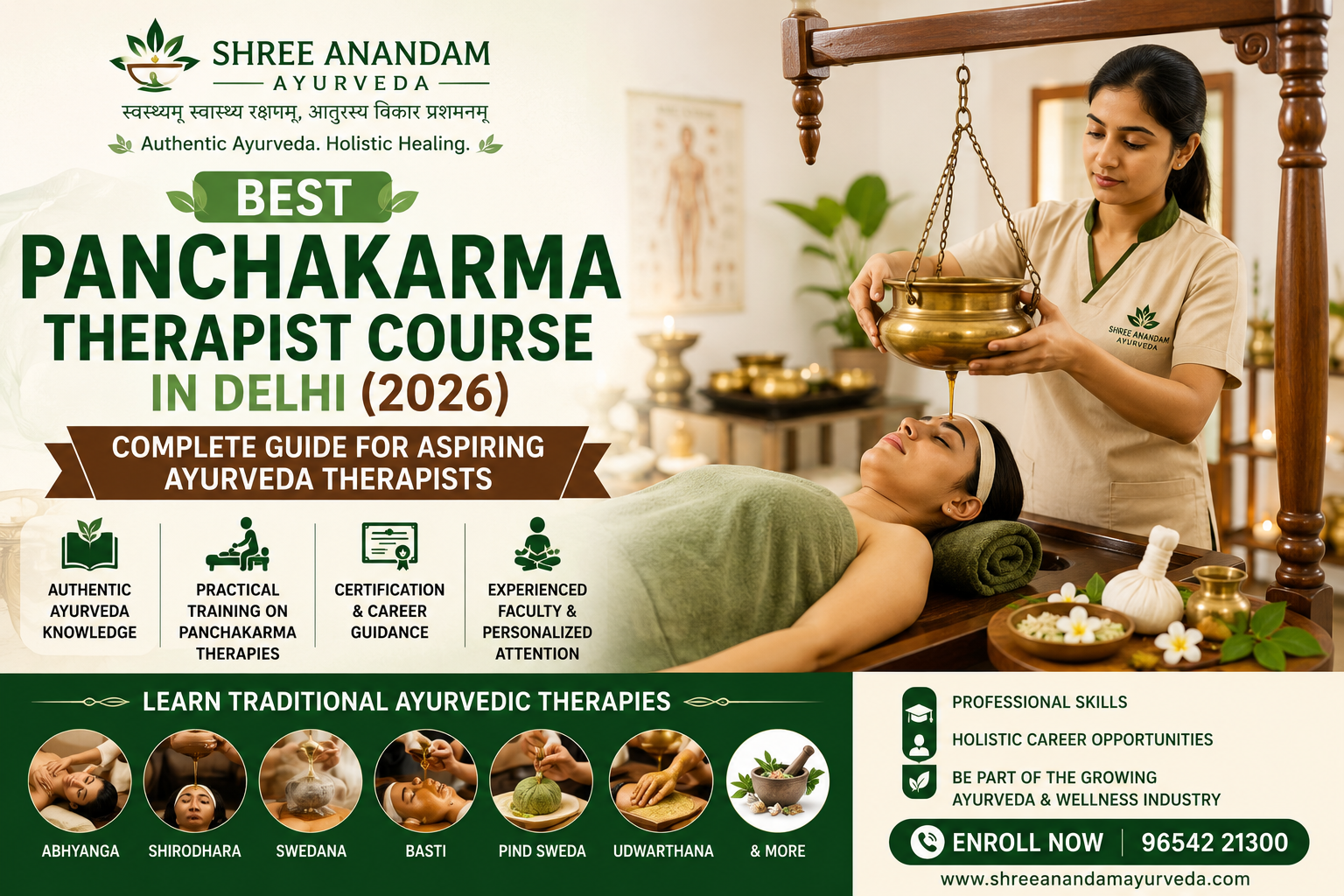
If you are looking for the best Panchakarma Therapist Course in Delhi, choosing a program that combines Ayurvedic theory with practical, hands-on training is essential. A professional course should help students understand the principles behind Panchakarma, learn traditional therapy procedures, develop appropriate therapist skills, and understand professional ethics and hygiene.
Shree Anandam Ayurveda, Delhi offers Panchakarma-focused training for aspiring Ayurveda therapists who want to develop practical knowledge of traditional Ayurvedic therapies in a structured learning environment.
What Is a Panchakarma Therapist Course?
A Panchakarma Therapist Course is designed to introduce students to the principles, procedures, preparation, and practical aspects of traditional Ayurvedic therapies associated with Panchakarma and related wellness treatments.
Panchakarma is an important area of Ayurveda involving specialized therapeutic procedures. Professional training therefore requires more than simply learning massage techniques.
Students should understand:
- Basic principles of Ayurveda
- Dosha concepts
- Ayurvedic terminology
- Panchakarma fundamentals
- Pre-procedure and post-procedure considerations
- Traditional Ayurvedic massage techniques
- Therapy-room preparation
- Hygiene and safety practices
- Therapist responsibilities
- Client communication
- Practical demonstration and supervised practice
The objective is to develop therapists who understand why a particular Ayurvedic therapy is performed, how it is traditionally carried out, and when professional supervision is required.
Why Choose a Panchakarma Therapist Course in Delhi?
Delhi is one of India’s major healthcare, wellness, education, and professional training hubs. Students from Delhi NCR and surrounding regions can access Ayurveda clinics, wellness centres, hospitals, and training institutes.
A structured Panchakarma training course in Delhi can provide aspiring therapists with opportunities to learn through classroom instruction, demonstrations, and practical exposure.
For students considering a career in Ayurveda wellness, Panchakarma therapy can be an interesting specialization because it combines traditional knowledge with practical therapist skills.
Why Choose Shree Anandam Ayurveda for Panchakarma Training?
At Shree Anandam Ayurveda, Delhi, the focus is on helping learners develop a strong foundation in Ayurvedic therapy practices through structured education and practical learning.
Key Learning Advantages
1. Ayurveda-Based Learning
Students are introduced to fundamental Ayurvedic concepts so that therapies are understood within their traditional context rather than treated as isolated massage techniques.
2. Practical-Oriented Training
Panchakarma is a practical field. Demonstration and supervised practice can help students understand therapist positioning, preparation, procedure flow, and professional conduct.
3. Traditional Therapy Knowledge
Students can learn about commonly used Ayurvedic therapies and their traditional applications as part of their course curriculum.
4. Professional Environment
Learning in an established Ayurveda environment helps students understand how therapy rooms, equipment, hygiene procedures, client communication, and daily therapist responsibilities work in practice.
5. Guidance from Ayurveda Professionals
Learning under experienced Ayurveda professionals can help students understand the importance of following appropriate protocols and working within their professional scope.
What Will You Learn in a Panchakarma Therapist Course?
A comprehensive Ayurvedic Panchakarma Therapist Course should cover both theoretical foundations and practical skills.
Depending on the course structure, students may learn about:
Ayurveda Fundamentals
- Introduction to Ayurveda
- Tridosha theory
- Prakriti and Vikriti
- Dinacharya
- Basic Ayurvedic terminology
- Introduction to Ayurvedic lifestyle principles
Panchakarma Fundamentals
- Meaning and principles of Panchakarma
- Introduction to Panchakarma procedures
- Role of preparatory procedures
- Importance of proper therapy planning
- Post-therapy considerations
- Therapist responsibilities
Practical Ayurvedic Therapies
Training may include exposure to therapies such as:
- Abhyanga
- Shirodhara
- Swedana
- Pinda Sweda
- Udwarthana
- Kati Basti
- Janu Basti
- Greeva Basti
- Netra-related local therapies where applicable
- Other localized Ayurvedic therapies
The exact procedures covered should depend on the institute’s curriculum, trainer supervision, and the learner’s professional scope.
Abhyanga: An Important Ayurvedic Therapy Skill
Abhyanga, the traditional Ayurvedic oil massage, is one of the important practical skills associated with Ayurvedic therapy training.
Students can learn about:
- Therapy-room preparation
- Selection and handling of oils under appropriate guidance
- Traditional massage movements
- Body positioning
- Therapist ergonomics
- Hygiene procedures
- Client comfort
- Post-therapy care
Proper training is important because Ayurvedic massage is not simply a relaxation massage. It is traditionally performed according to Ayurvedic principles and should be delivered responsibly.
Shirodhara Training
Shirodhara is another well-known Ayurvedic therapy in which a continuous stream of liquid is traditionally directed over the forehead.
A professional training program should introduce students to:
- Equipment preparation
- Therapy-room setup
- Client positioning
- Procedure sequence
- Hygiene
- Therapist responsibilities
- Post-therapy considerations
Students should understand that specialized Ayurvedic procedures must be performed according to appropriate protocols and professional supervision.
Basti and Localized Ayurvedic Therapies
Basti and localized therapies form an important part of Ayurvedic therapeutic practice.
Training may introduce learners to localized procedures such as:
- Kati Basti
- Janu Basti
- Greeva Basti
- Other traditional localized therapies
The focus should be on understanding preparation, equipment, procedure flow, hygiene, client comfort, and the importance of appropriate clinical supervision.
Important: Therapists should not independently diagnose medical conditions or prescribe Ayurvedic medicines unless legally qualified and authorized to do so. Therapist training and Ayurvedic medical practice are different professional roles.
Who Can Join a Panchakarma Therapist Course?
Eligibility varies between training providers, so students should confirm the current requirements directly with the institute before enrollment.
A Panchakarma therapist training program may be suitable for:
- Ayurveda therapy aspirants
- Wellness professionals
- Massage therapists
- Students interested in Ayurvedic therapies
- Individuals looking for an Ayurveda-based career
- Wellness centre employees
- Existing therapists seeking additional Ayurvedic skills
The appropriate course level depends on the learner’s educational background and career objective.
Is Panchakarma Therapist a Good Career Option?
The wellness industry has created opportunities for trained professionals across Ayurveda clinics, wellness centres, spas, retreats, and holistic healthcare environments.
After suitable training and depending on applicable qualifications and local regulations, a trained Ayurveda therapist may explore opportunities in:
- Ayurvedic clinics
- Panchakarma centres
- Ayurveda wellness centres
- Wellness resorts
- Retreat centres
- Ayurvedic hospitals
- Spas offering authentic Ayurvedic services
- Health and wellness facilities
Some experienced professionals may also explore entrepreneurship, subject to applicable legal and professional requirements.
Skills You Need to Become a Good Panchakarma Therapist
A successful therapist needs more than technical knowledge.
Important Professional Skills
Knowledge of Ayurveda:
Understand the fundamental concepts behind traditional therapies.
Practical Skills:
Develop proper technique through demonstration and supervised practice.
Communication:
Listen carefully and communicate clearly with clients.
Observation:
Pay attention to comfort, positioning, procedure requirements, and changes during therapy.
Hygiene:
Maintain excellent cleanliness and infection-control practices.
Professionalism:
Respect privacy, boundaries, confidentiality, and professional ethics.
Physical Fitness:
Many therapies require therapists to stand and work with their hands for extended periods.
Theory + Practical Training: Why Both Matter
One of the biggest mistakes aspiring therapists can make is choosing a course based only on the number of procedures taught.
A quality Panchakarma Therapist Training Course in Delhi should balance theory and practical learning.
Theory Helps You Understand:
- Ayurveda fundamentals
- Dosha concepts
- Therapy principles
- Traditional terminology
- Procedure requirements
- Professional responsibilities
Practical Training Helps You Develop:
- Therapist hand movements
- Correct positioning
- Equipment handling
- Therapy preparation
- Procedure sequencing
- Hygiene practices
- Client communication
This combination creates a stronger foundation for professional development.
How to Choose the Best Panchakarma Therapist Course in Delhi?
Before enrolling, compare courses carefully.
1. Check the Curriculum
Look for a curriculum covering both Ayurvedic fundamentals and practical therapy training.
2. Ask About Practical Sessions
Panchakarma is practical by nature. Ask how much hands-on training is included.
3. Understand Who Teaches the Course
Check the qualifications and professional experience of the trainers.
4. Ask About Certification
Understand what certificate is provided, who issues it, and what it represents. Do not assume that every private course certificate is equivalent to a government-recognized qualification.
5. Check Training Facilities
A suitable learning environment should provide appropriate therapy equipment and a professional setup for practical sessions.
6. Ask About Career Guidance
If your goal is employment, ask whether the institute provides career guidance, practical exposure, or placement assistance.
7. Understand the Course Duration and Fees
Course duration and fees can vary significantly. Always obtain the current fee structure and course schedule directly from the training institute.
Panchakarma Therapist Course vs Ayurvedic Massage Course
These courses are related but may have different objectives.
An Ayurvedic massage course may primarily focus on massage techniques and wellness applications.
A Panchakarma Therapist Course can provide broader exposure to traditional Ayurvedic therapy procedures and Panchakarma-related concepts.
If your goal is to work specifically in an Ayurveda clinic or Panchakarma environment, a broader therapy-focused course may provide a more suitable foundation.
Career Opportunities After Panchakarma Training
Completing a suitable training program can help learners build skills for potential roles such as:
- Panchakarma Therapist
- Ayurvedic Therapist
- Ayurveda Wellness Therapist
- Spa Therapist with Ayurvedic specialization
- Panchakarma Centre Therapist
- Wellness Centre Therapist
- Ayurvedic Massage Therapist
Career opportunities depend on the individual’s training, certification, practical experience, employer requirements, and applicable regulations.
Why Practical Experience Matters
Reading about Abhyanga, Shirodhara, Swedana, or other Ayurvedic procedures is very different from actually learning how they are performed.
Practical training allows students to understand:
- How to prepare the therapy area
- How to organize equipment
- How to position the client
- How to maintain therapist ergonomics
- How to follow a procedure systematically
- How to maintain hygiene
- How to communicate professionally
This is why aspiring therapists should prioritize hands-on Panchakarma training when comparing courses.
Panchakarma Therapist Course in Delhi for Beginners
If you are completely new to Ayurveda, don’t worry.
A beginner-friendly course can start with the fundamentals and gradually introduce practical procedures.
A typical learning journey can move from:
Ayurveda Basics → Panchakarma Fundamentals → Therapy Demonstration → Supervised Practice → Professional Skills → Career Preparation
This step-by-step approach can make it easier for beginners to understand both the theory and practical aspects of Ayurvedic therapies.
Frequently Asked Questions
What is the best Panchakarma Therapist Course in Delhi?
The best course depends on your educational background, career goals, curriculum, practical training, trainers, certification, and learning environment. Shree Anandam Ayurveda provides Panchakarma-focused training designed to combine Ayurvedic knowledge with practical therapy learning.
How long is a Panchakarma Therapist Course?
Course duration varies according to the institute and program level. Students should check the current course duration directly with the training provider.
Is Panchakarma training practical?
Yes. Practical learning is an important component of developing therapist skills because many Ayurvedic procedures require correct technique, positioning, preparation, and supervised practice.
Can beginners join a Panchakarma Therapist Course?
Eligibility depends on the specific course. Beginner-oriented programs may be available for individuals who want to enter the Ayurvedic wellness and therapy field.
What therapies are taught in Panchakarma training?
Depending on the curriculum, training may cover therapies such as Abhyanga, Shirodhara, Swedana, Pinda Sweda, Udwarthana, Kati Basti, Janu Basti, Greeva Basti, and other traditional Ayurvedic procedures.
Is a Panchakarma Therapist the same as an Ayurvedic doctor?
No. A therapist and an Ayurvedic physician have different educational and professional roles. A therapist performs therapies within their training and professional scope, while diagnosis, medical treatment, and prescribing medicines require appropriate professional qualifications and authorization.
Does Shree Anandam Ayurveda offer Panchakarma therapist training in Delhi?
Shree Anandam Ayurveda, Delhi, offers Ayurveda-focused learning and therapy training opportunities. Prospective students should contact the institute to confirm the latest course availability, eligibility, duration, curriculum, fees, and certification details before enrollment.
Start Your Ayurveda Therapy Career with Shree Anandam Ayurveda
Choosing the right training institute is the first step toward developing a successful career in Ayurvedic therapy.
If you are searching for a Panchakarma Therapist Course in Delhi, Shree Anandam Ayurveda provides a learning environment focused on authentic Ayurvedic principles, practical therapy skills, professional discipline, and hands-on learning.
Whether you are a beginner exploring Ayurveda or an existing wellness professional looking to expand your skills, structured Panchakarma training can help you build a stronger foundation for your professional journey.