Irregular periods, unexplained weight gain, stubborn acne, excessive facial hair, hair fall, mood changes, or difficulty conceiving can sometimes be associated with Polycystic Ovary Syndrome (PCOS). For many women, these symptoms affect not only physical health but also confidence, emotional well-being, and future fertility plans.
PCOS is a common hormonal and metabolic condition. According to the World Health Organization, it affects an estimated 10–13% of women of reproductive age, and it is a leading cause of anovulation and infertility. Symptoms can vary significantly from one woman to another, which is why individualized assessment and long-term management are important.
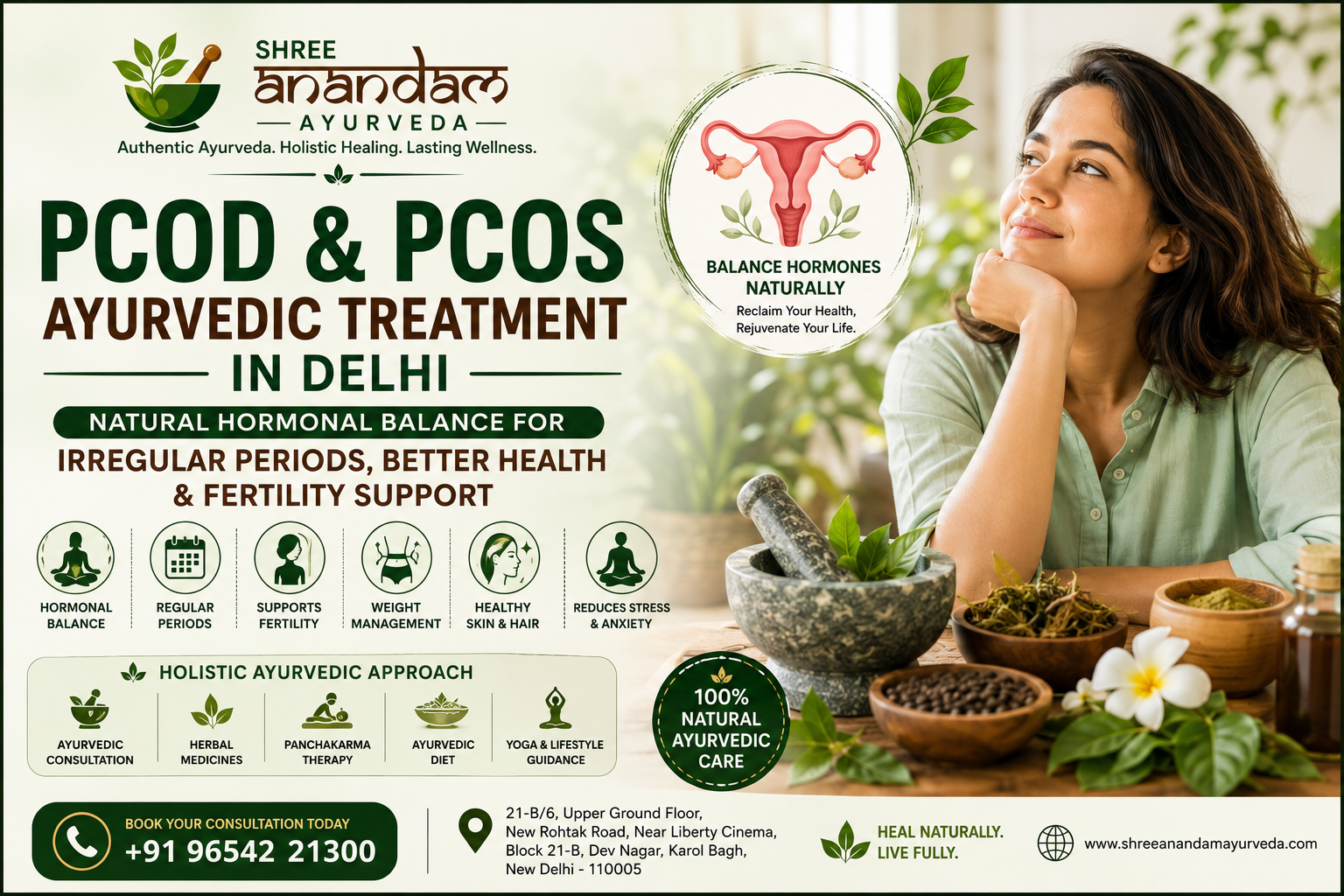
If you are searching for PCOD or PCOS Ayurvedic Treatment in Delhi, Shree Anandam Ayurveda offers a personalized approach combining Ayurvedic consultation, herbal support, diet and lifestyle guidance, yoga recommendations, and selected Ayurvedic therapies based on individual needs.
Rather than promising a quick or permanent “cure,” the Ayurvedic approach aims to support hormonal and metabolic balance, menstrual health, digestion, weight management, stress reduction, and overall reproductive wellness alongside appropriate conventional medical care.
What Are PCOD and PCOS?
The terms PCOD (Polycystic Ovarian Disease) and PCOS (Polycystic Ovary Syndrome) are commonly used in everyday searches and conversations. In current medical practice, PCOS is the established clinical term.
PCOS is a complex hormonal and metabolic condition that may affect:
- Menstrual cycles
- Ovulation
- Androgen (male-type hormone) levels
- Insulin sensitivity
- Body weight and metabolism
- Skin and hair
- Fertility
- Emotional well-being
Not every woman with PCOS has the same symptoms, and having ovarian cysts alone does not necessarily mean that someone has PCOS. A proper medical evaluation is therefore essential.
Common Symptoms of PCOS
PCOS may present differently depending on a woman’s age, hormonal profile, metabolic health, and lifestyle.
Commonly experienced symptoms include:
- Irregular or delayed periods
- Missed periods
- Infrequent ovulation
- Difficulty conceiving
- Unexplained weight gain
- Difficulty losing weight
- Acne and oily skin
- Excessive facial or body hair
- Hair thinning or hair fall
- Darkening of skin in certain areas
- Mood fluctuations
- Fatigue
- Sleep-related problems
Because PCOS is also associated with increased risks of metabolic problems, including insulin resistance, type 2 diabetes, and obesity, management should look beyond menstrual symptoms alone.
What Causes PCOS?
There is no single cause of PCOS. It is considered a complex condition influenced by multiple factors.
These may include:
Hormonal Imbalance
Higher androgen levels can interfere with normal ovulation and contribute to irregular periods, acne, and unwanted hair growth.
Insulin Resistance
When the body’s cells do not respond effectively to insulin, insulin levels may increase. This can influence androgen production and make PCOS symptoms more difficult to manage.
Genetic Factors
PCOS can run in families, suggesting that genetic factors may contribute to an individual’s risk.
Lifestyle & Metabolic Factors
Diet, physical activity, sleep, stress, and weight can influence metabolic health and the severity of PCOS symptoms, although PCOS can affect women across different body sizes.
How Does Ayurveda Understand PCOS and PCOD?
Ayurveda takes an individualized approach to health. Rather than viewing PCOS as an isolated ovarian problem, an Ayurvedic practitioner may assess menstrual patterns alongside digestion, metabolism, sleep, stress, body constitution (Prakriti), current Dosha imbalance (Vikriti), and overall lifestyle.
From a traditional Ayurvedic perspective, management may focus on correcting individual imbalances and supporting Agni (digestive and metabolic function), healthy tissue nourishment, regular daily routines, and reproductive wellness.
The specific Ayurvedic approach can differ significantly between patients. Therefore, herbal medicines or Panchakarma procedures should not be selected solely based on an online list of PCOS remedies.
Ayurvedic Treatment for PCOS & PCOD in Delhi
At Shree Anandam Ayurveda, an individualized PCOS management program may include a combination of several approaches depending on the patient’s symptoms and medical history.
1. Personalized Ayurvedic Consultation
Treatment begins with a detailed evaluation that may consider:
- Menstrual history
- Existing PCOS diagnosis and investigations
- Hormonal symptoms
- Weight and metabolic concerns
- Digestive health
- Sleep quality
- Stress levels
- Diet and lifestyle
- Fertility goals
- Current medications
This assessment helps the Ayurvedic doctor develop an individualized care plan rather than using the same treatment for every patient.
2. Ayurvedic Herbal Support for PCOS
Traditional Ayurvedic practice uses various herbs and formulations depending on an individual’s constitution and symptoms.
Herbs commonly discussed in Ayurvedic women’s wellness include Shatavari, Ashwagandha, Guduchi, Triphala, and other physician-selected formulations. However, “natural” does not automatically mean suitable or risk-free. Herbs can have side effects or interact with fertility medicines, diabetes medication, thyroid treatment, and other drugs.
For this reason, herbal treatment should be prescribed by a qualified practitioner after assessing your individual health profile.
3. Panchakarma Therapy for PCOS
Women searching for Panchakarma for PCOS in Delhi often want to know whether Ayurvedic detoxification can help with hormonal imbalance.
Panchakarma is a traditional system of individualized Ayurvedic procedures. Depending on a patient’s constitution and clinical assessment, an Ayurvedic physician may consider selected preparatory or Panchakarma-related therapies as part of a broader wellness program.
The objective may be to support:
- Digestive and metabolic wellness
- Stress management
- Healthy daily routines
- Overall physical rejuvenation
However, Panchakarma should not be presented as a proven cure for PCOS or infertility. Evidence for specific Ayurvedic therapies in PCOS remains limited compared with established evidence-based interventions. Panchakarma procedures should only be undertaken after professional assessment, especially for women trying to conceive or undergoing fertility treatment.
4. Ayurvedic Diet for PCOS & Hormonal Balance
Diet plays an important role in PCOS management, particularly when metabolic health or insulin resistance is a concern.
A personalized nutrition plan may emphasize:
- Fresh vegetables
- Whole grains appropriate to individual needs
- Adequate protein
- High-fibre foods
- Minimally processed meals
- Healthy fats
- Regular meal timing
- Appropriate hydration
Highly processed foods, excessive added sugars, and frequent consumption of refined carbohydrates may be limited depending on individual metabolic needs.
There is no single “PCOS diet” suitable for everyone. International evidence-based guidance emphasizes sustainable lifestyle management—including nutrition, physical activity, and behavioural strategies—as a core component of PCOS care.
5. Yoga, Exercise & Stress Management for PCOS
Stress and poor sleep can make managing any chronic condition more challenging. A holistic PCOS plan may therefore include:
- Regular physical activity
- Yoga
- Pranayama
- Meditation
- Stress-management practices
- Consistent sleep routines
These approaches can complement medical treatment and support overall physical and emotional health.
Can Ayurvedic Treatment Help with Irregular Periods Due to PCOS?
Irregular menstruation is one of the most common concerns among women with PCOS.
Ayurvedic management may be used as a complementary approach focusing on lifestyle, diet, stress management, metabolic health, and individualized herbal support. However, persistent irregular or absent periods should be medically evaluated rather than treated through self-medication.
A proper diagnosis is important because irregular periods can also occur due to thyroid disorders, pregnancy, elevated prolactin, perimenopause, and other medical conditions.
At Shree Anandam Ayurveda, the aim is to understand the individual’s overall health pattern and develop a personalized wellness plan while recommending appropriate medical evaluation when required.
PCOS, Ayurveda & Fertility: Can Natural Treatment Help You Conceive?
PCOS is a leading cause of infertility because it can interfere with regular ovulation. However, having PCOS does not automatically mean that a woman cannot become pregnant.
For women planning pregnancy, improving lifestyle and metabolic health can form an important part of preconception care. Ayurvedic wellness approaches may complement this through individualized diet, stress management, yoga, and physician-supervised herbal support.
Women experiencing difficulty conceiving should also receive appropriate fertility evaluation. Evidence-based PCOS guidelines provide specific recommendations for fertility management, and treatment should be individualized according to age, ovulation, partner factors, and other possible causes of infertility.
Ayurvedic care should therefore be viewed as supportive and complementary, not as a replacement for necessary fertility investigations or evidence-based reproductive treatment.
PCOS Treatment for Weight Gain & Metabolic Health
Weight gain and difficulty managing weight are common concerns for some—but not all—women with PCOS.
A sustainable management plan may focus on:
- Balanced nutrition
- Regular physical activity
- Better sleep
- Stress management
- Metabolic health monitoring
- Behavioural strategies
- Personalized medical treatment when required
The goal should not simply be rapid weight loss. Improving metabolic health and creating sustainable habits can provide broader long-term benefits.
Why Choose Shree Anandam Ayurveda for PCOD & PCOS Ayurvedic Treatment in Delhi?
Women searching for an Ayurvedic doctor for PCOS in Delhi often need more than generic herbal remedies. They need a treatment plan that considers their menstrual symptoms, metabolism, lifestyle, stress levels, and fertility goals.
At Shree Anandam Ayurveda, the approach focuses on:
✓ Individual Ayurvedic health assessment
✓ Personalized PCOS and PCOD management plans
✓ Physician-guided Ayurvedic herbal support
✓ Selected Ayurvedic therapies based on individual suitability
✓ Diet and lifestyle recommendations
✓ Yoga and stress-management guidance
✓ Menstrual and reproductive wellness support
✓ Holistic approach to metabolic health
✓ Convenient location in Karol Bagh, New Delhi
The objective is to provide responsible, individualized Ayurvedic care while recognizing when conventional medical evaluation or specialist fertility care is needed.
Frequently Asked Questions About Ayurvedic PCOS Treatment
Can PCOS be cured permanently with Ayurveda?
PCOS is generally considered a long-term hormonal and metabolic condition rather than something for which a universal permanent cure can be promised. Symptoms can often be effectively managed through appropriate lifestyle interventions and individualized medical care. Ayurvedic treatment may be used as a complementary approach to support overall wellness and symptom management.
Which Ayurvedic therapy is best for PCOS?
There is no single Ayurvedic therapy that is best for every woman with PCOS. Treatment depends on symptoms, body constitution, metabolic health, menstrual pattern, fertility goals, and medical history. A qualified Ayurvedic doctor should determine whether herbal support or specific therapies are appropriate.
Is Panchakarma beneficial for PCOS?
Panchakarma is used traditionally in Ayurveda as part of individualized wellness programs, but evidence supporting Panchakarma as a specific treatment or cure for PCOS is limited. It should only be considered after assessment by a qualified practitioner and should not replace evidence-based PCOS care.
Can Ayurveda help with irregular periods in PCOS?
Ayurvedic care may complement PCOS management through individualized lifestyle, dietary, stress-management, and herbal approaches. Because irregular periods can have several causes, a proper medical diagnosis is important before starting treatment.
Can women with PCOS become pregnant naturally?
Yes, many women with PCOS can conceive, although irregular ovulation may make conception more difficult for some. Women who are trying to conceive and have irregular cycles or difficulty becoming pregnant should seek appropriate medical and fertility evaluation.
How long does Ayurvedic PCOS treatment take?
There is no fixed duration. It depends on the individual’s symptoms, menstrual cycle, metabolic health, lifestyle, treatment goals, and response to care. Be cautious of any clinic promising guaranteed results within a specific number of days.
Start Your Journey Towards Better Hormonal & Reproductive Wellness
If you are searching for PCOD & PCOS Ayurvedic Treatment in Delhi, Ayurvedic treatment for hormonal imbalance, Panchakarma therapy for PCOS, or a natural complementary approach for irregular periods and reproductive wellness, Shree Anandam Ayurveda offers personalized Ayurvedic care in Delhi.
The focus is on understanding your individual health needs and creating a holistic plan that may combine Ayurvedic consultation, physician-supervised herbal support, diet and lifestyle guidance, stress management, yoga, and suitable traditional therapies.
For women planning pregnancy or experiencing significant menstrual or metabolic symptoms, coordinated care with a gynecologist, endocrinologist, or fertility specialist may also be appropriate.
Consult Shree Anandam Ayurveda in Karol Bagh, Delhi, to discuss a personalized Ayurvedic wellness plan for PCOS and PCOD management.