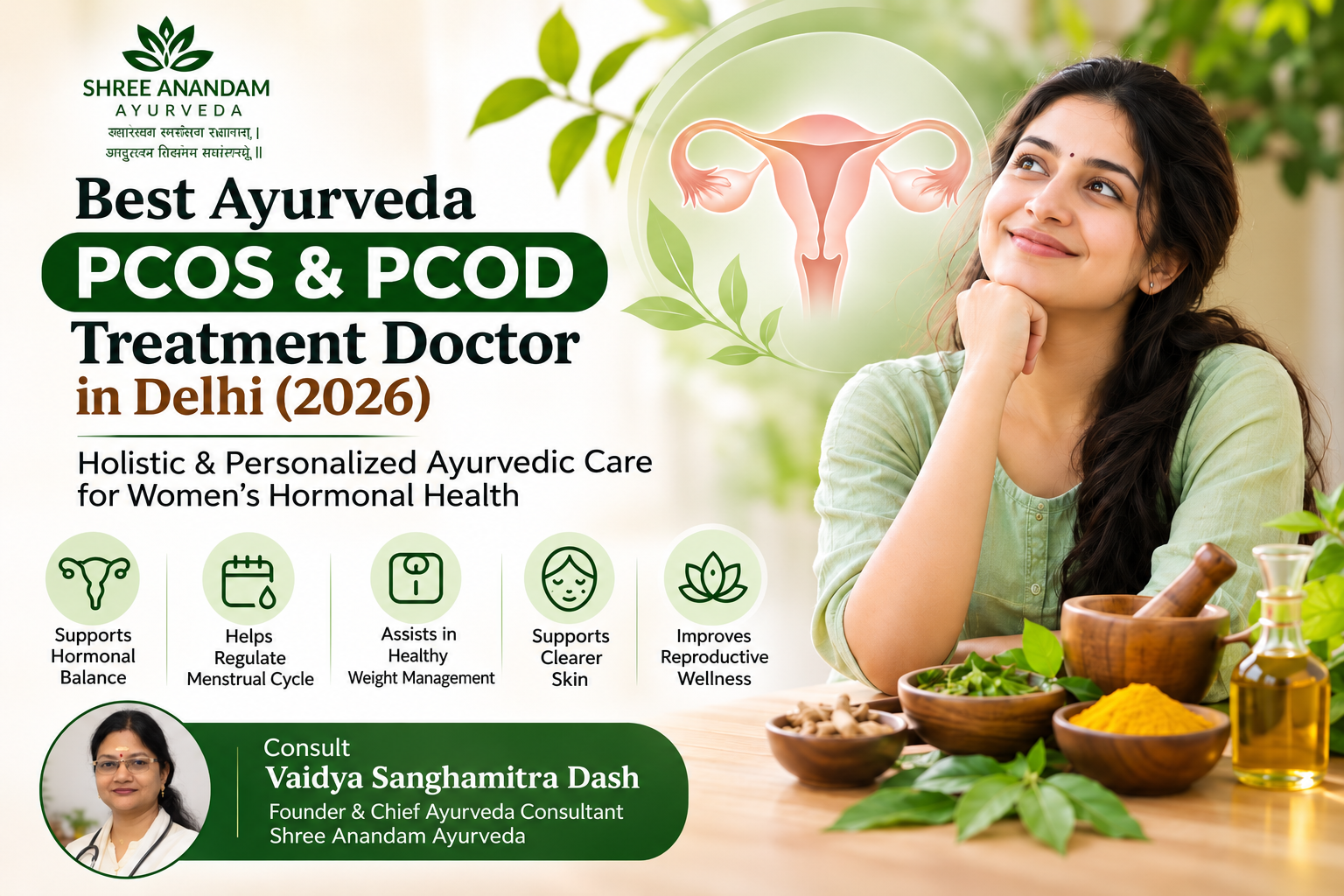
Looking for Ayurvedic PCOS treatment in Delhi? Women experiencing irregular periods, acne, unwanted facial hair, weight changes, or difficulty conceiving may benefit from a proper medical evaluation and an individualized care plan. At Shree Anandam Ayurveda, Karol Bagh, Delhi, Vaidya Sanghamitra Dash, Founder and Chief Ayurveda Consultant, offers personalized Ayurvedic consultations and wellness guidance.
PCOS (commonly called PCOD) is a complex hormonal and metabolic condition. Its management requires attention to menstrual health, metabolic risk factors, emotional well-being, skin and hair concerns, and reproductive goals. Ayurveda may be explored as a complementary approach to diet, lifestyle, and general wellness, while appropriate gynaecological and endocrinological care remains important.
If you are searching for a PCOS treatment doctor in Delhi, an Ayurvedic doctor for PCOD, or an Ayurvedic clinic for women’s hormonal wellness, this guide explains the condition, available care approaches, important precautions, and how to choose a practitioner.
Consultation at Shree Anandam Ayurveda
- Ayurveda consultant: Vaidya Sanghamitra Dash
- Clinic: Shree Anandam Ayurveda
- Location: 21-B/6, Upper Ground Floor, New Rohtak Road, near Liberty Cinema, Karol Bagh, New Delhi – 110005
- Phone: +91-9654221300
- Website: https://www.shreeanandamayurveda.com/
- Doctor profile: https://www.shreeanandamayurveda.com/dr-vaidya-sanghamitra-dash
What Is PCOS or PCOD? Understanding the Difference
Polycystic Ovary Syndrome (PCOS) is a hormonal condition that can affect ovulation, menstrual cycles, skin, hair growth, metabolism, and fertility. PCOD is a commonly used term in India when discussing similar ovarian and hormonal concerns.
Although PCOD and PCOS are often used interchangeably in everyday conversations, PCOS is the established clinical term used in international medical guidelines. It is not simply a condition in which a woman has cysts in her ovaries.
PCOS can involve a combination of:
- Irregular or absent menstrual periods
- Infrequent or absent ovulation
- Higher androgen levels
- Acne and oily skin
- Excess facial or body hair
- Thinning scalp hair
- Weight gain or difficulty managing weight
- Insulin resistance or other metabolic concerns
- Difficulty becoming pregnant in some women
Important: Not every woman with PCOS experiences all these symptoms. Some women have regular periods, some are lean, and others may not have visible ovarian changes on ultrasound.
The World Health Organization describes PCOS as a common hormonal disorder affecting women during their reproductive years. The condition can also have longer-term metabolic and psychological implications.
What Are the Common Symptoms of PCOS and PCOD in Women?
PCOS symptoms vary from person to person. Some women initially notice changes in their menstrual cycle, while others seek medical advice because of acne, hair growth, weight changes, or fertility concerns.
1. Irregular Menstrual Periods
Irregular periods are among the commonly reported symptoms of PCOS. A woman may experience:
- Delayed periods
- Long gaps between menstrual cycles
- Fewer menstrual periods in a year
- Missed periods
- Unpredictable menstrual cycles
Irregular ovulation can make it difficult to predict the fertile window. Prolonged gaps between periods should be discussed with a qualified healthcare professional because the uterine lining may need assessment and protection.
2. Weight Gain and Difficulty Managing Weight
Some women with PCOS experience weight gain, particularly around the abdomen. Insulin resistance can contribute to metabolic difficulties in some patients.
However, PCOS can also occur in women who are not overweight. Body weight alone cannot confirm or rule out the condition.
3. Acne and Oily Skin
Higher androgen levels may contribute to:
- Persistent facial acne
- Oily skin
- Acne around the chin and jawline
- Recurring breakouts
- Increased facial or body hair
A dermatologist or gynaecologist may be needed when skin symptoms are persistent or severe.
4. Excess Facial Hair and Hair Thinning
Some women notice unwanted hair growth on the chin, upper lip, chest, or abdomen. Others experience scalp hair thinning.
These changes may be associated with increased androgen activity. A proper evaluation can help identify the cause and suitable treatment options.
5. Difficulty Conceiving
PCOS can affect ovulation. When an egg is not released regularly, conception may become more difficult.
However, many women with PCOS can become pregnant with appropriate care. Fertility treatment depends on age, ovulation, other medical conditions, partner-related factors, and individual reproductive goals.
What Causes PCOS? Understanding the Possible Contributing Factors
There is no single cause of PCOS. Research indicates that genetic, hormonal, and metabolic factors may contribute to its development.
| Contributing factor | How it may be associated with PCOS |
|---|---|
| Insulin resistance | Can contribute to higher insulin levels and increased androgen production |
| Hormonal imbalance | May affect ovulation and menstrual regularity |
| Genetic predisposition | PCOS may run in families |
| Androgen excess | May contribute to acne, unwanted hair growth, and ovulatory changes |
| Metabolic factors | May be associated with weight changes and increased risk of metabolic conditions |
| Lifestyle factors | Diet, physical activity, sleep, and stress can influence overall metabolic health |
PCOS is not caused simply by eating particular foods, being overweight, or having an unhealthy lifestyle. It is a multifactorial condition and should be assessed individually.
How Is PCOS Diagnosed? Tests and Medical Evaluation
There is no single blood test that independently confirms PCOS in every woman.
In adults, clinicians generally assess a combination of features after excluding other possible causes. These include:
- Clinical or biochemical signs of elevated androgen levels.
- Irregular or absent ovulation.
- Polycystic ovarian morphology on ultrasound, where appropriate.
In adults, the 2023 international guideline also recognizes anti-Müllerian hormone (AMH) as an alternative to ultrasound for assessing polycystic ovarian morphology in the appropriate diagnostic context. AMH should not be used as a standalone PCOS test.
A healthcare professional may recommend investigations based on the symptoms and clinical history.
| Investigation | Why it may be recommended |
|---|---|
| Pelvic ultrasound | To assess ovarian morphology and other pelvic concerns |
| Total or free testosterone | To assess androgen levels |
| TSH | To evaluate thyroid function |
| Prolactin | To investigate other causes of menstrual irregularity |
| Blood glucose or HbA1c | To assess glucose regulation |
| Lipid profile | To assess cholesterol and metabolic risk |
| Other hormone tests | Depending on symptoms and differential diagnosis |
Remember: A scan showing multiple small follicles does not automatically mean that someone has PCOS. Diagnosis requires an appropriate clinical assessment.
What Is the Role of Ayurveda in PCOS and PCOD Management?
Ayurveda takes an individualized approach to health. It considers a person’s constitution, digestive health, dietary habits, daily routine, sleep, stress, and overall well-being.
In Ayurvedic consultations, practitioners may assess the person’s symptoms and discuss them through traditional Ayurvedic concepts such as Dosha balance, Agni, and lifestyle patterns.
For women seeking Ayurvedic PCOS treatment in Delhi, the purpose of a consultation should be to understand individual concerns and discuss whether complementary Ayurvedic care is appropriate.
Potential areas of supportive care may include:
- Personalized dietary guidance
- Regular daily routines
- Physical activity and movement
- Sleep and stress-management practices
- General reproductive wellness
- Review of existing medicines and supplements
- Individualized Ayurvedic recommendations, where appropriate
It is important to understand that high-quality clinical evidence for Ayurveda as a treatment that reverses or cures PCOS is currently limited. Ayurvedic care should not be presented as a proven substitute for established PCOS management.
Ayurvedic PCOS Treatment in Delhi: What May an Individualized Care Plan Include?
At Shree Anandam Ayurveda, consultations are described by the clinic as personalized and based on Ayurvedic assessment and wellness planning.
The suitability of any intervention depends on the patient’s symptoms, medical history, investigations, existing medicines, and reproductive goals.
1. Individual Ayurvedic Consultation
An initial consultation can help the practitioner understand:
- Menstrual history and cycle patterns
- Changes in weight and appetite
- Skin and hair concerns
- Sleep quality and daily routine
- Digestive symptoms
- Stress and emotional well-being
- Previous diagnoses and investigations
- Current medicines and supplements
- Pregnancy or fertility plans
Patients should bring previous ultrasound reports, relevant blood investigations, and a list of medicines or supplements they currently use.
2. Personalized Diet and Nutrition Guidance
Nutrition is an important part of long-term PCOS management. There is no single diet that works best for every woman with PCOS.
A balanced eating pattern may include:
- Vegetables and seasonal fruits
- Whole grains and fibre-rich foods
- Pulses, beans, and legumes
- Adequate protein
- Nuts and seeds
- Healthy sources of dietary fat
- Regular and balanced meals
Some women may benefit from reducing frequent consumption of sugary drinks and highly processed foods.
Ayurvedic dietary recommendations should be adapted to nutritional requirements, medical conditions, food preferences, and individual tolerance. Restrictive diets and extreme fasting should be avoided unless specifically advised by an appropriate healthcare professional.
3. Daily Routine and Physical Activity
A sustainable daily routine can support metabolic and general health.
Useful habits may include:
- Consistent sleep and wake-up times
- Regular walking
- Strength-training exercises, where suitable
- Yoga or gentle movement
- Adequate hydration
- Breaks from prolonged sitting
- Practical stress-management activities
Physical activity can be beneficial even when it does not result in weight loss. The goal should be better overall health rather than focusing only on the number on the weighing scale.
4. Stress and Emotional Well-Being
Living with irregular periods, acne, unwanted hair growth, and fertility concerns can affect confidence and emotional well-being.
A supportive wellness routine may include meditation, breathing exercises, yoga, adequate sleep, and counselling when needed.
Persistent anxiety, depression, disordered eating, or significant emotional distress should be discussed with a qualified mental health professional.
5. Ayurvedic Medicines and Herbal Preparations
Ayurvedic medicines should never be selected solely from an online PCOS medicine list.
Before recommending any herbal preparation, a practitioner should consider:
- Existing medical conditions
- Pregnancy or breastfeeding status
- Liver and kidney health, where relevant
- Current prescription medicines
- Potential herb–drug interactions
- Product quality and ingredients
- The available evidence for the proposed preparation
Some herbal or traditional products may contain ingredients that interact with prescription medicines or cause adverse effects. Do not discontinue metformin, hormonal medication, thyroid medicine, or other prescribed treatment without discussing it with the prescribing doctor.
6. Panchakarma and Other Ayurvedic Therapies
Panchakarma is a group of traditional Ayurvedic procedures. Its suitability is not automatic for every woman with PCOS.
There is insufficient high-quality evidence to establish Panchakarma as a proven treatment for PCOS or as a method to restore ovulation or guarantee pregnancy.
Any proposed procedure should have a clear clinical rationale, be performed by appropriately trained professionals, and be discussed in the context of the patient’s medical condition. Avoid therapies that are presented as mandatory detoxification or a guaranteed hormonal reset.
Ayurveda vs Modern Medical Management for PCOS: Understanding the Difference
Women searching for PCOS treatment often want to understand whether they should choose Ayurveda, conventional medical care, or both.
The most important consideration is safe, coordinated care rather than choosing a treatment system based on marketing claims.
| Area of care | Evidence-based medical management | Ayurvedic complementary care |
|---|---|---|
| Diagnosis | Clinical assessment, blood tests, and ultrasound where appropriate | Traditional Ayurvedic assessment may complement, but not replace, medical diagnosis |
| Irregular periods | Medical options may include hormonal treatments, depending on individual needs | Lifestyle and individualized wellness guidance |
| Metabolic health | Glucose and lipid assessment; medicines such as metformin may be appropriate for selected patients | Dietary and lifestyle support |
| Acne and excess hair | Dermatological and hormonal treatment options | General wellness support; not a proven replacement for dermatological treatment |
| Fertility | Ovulation induction and fertility treatment when indicated | Complementary support only; not a substitute for fertility evaluation |
| Long-term monitoring | Assessment of metabolic, reproductive, and psychological health | Individualized wellness follow-up |
A balanced approach: Women may explore Ayurvedic wellness guidance alongside appropriate medical management. Coordination between the Ayurvedic practitioner, gynaecologist, endocrinologist, and fertility specialist can help avoid conflicting advice.
Why Consider Shree Anandam Ayurveda for an Ayurvedic Consultation in Delhi?
Shree Anandam Ayurveda is an Ayurvedic clinic and Panchakarma care centre located in Karol Bagh, New Delhi.
The clinic’s published website describes its approach through personalized Ayurvedic consultations, traditional therapies, and lifestyle guidance.
Meet Vaidya Sanghamitra Dash – Founder & Chief Ayurveda Consultant
Vaidya Sanghamitra Dash is the Founder and Chief Ayurveda Consultant at Shree Anandam Ayurveda.
According to her published clinic profile:
- She holds an M.D. (Ayurveda) in Rachana Shareer.
- Her academic specialization is Ayurvedic anatomy and structural sciences.
- She has experience in Ayurvedic clinical practice and teaching.
- She is the Founder and CEO of Ayursure Ayurveda Academy.
- Her profile lists previous teaching experience at G S Ayurveda Medical College, U.P.
- Her profile also lists a visiting professorship at Jawaharlal Nehru University (JNU), New Delhi.
Her clinical approach, as described by the clinic, combines classical Ayurvedic principles with individualized assessment and wellness guidance.
For women considering PCOS or PCOD-related Ayurvedic care, a consultation can help them discuss their concerns, understand possible complementary care options, and identify when further medical assessment is necessary.
Important clarification: Her published profile identifies her as an Ayurveda consultant. Patients should confirm the specific scope of consultation and should not assume that an Ayurvedic consultation replaces assessment by a gynaecologist or endocrinologist.
Clinic Details and Patient Convenience
| Clinic information | Details |
|---|---|
| Clinic name | Shree Anandam Ayurveda |
| Consultant | Vaidya Sanghamitra Dash |
| Designation | Founder & Chief Ayurveda Consultant |
| Address | 21-B/6, Upper Ground Floor, New Rohtak Road, near Liberty Cinema, Karol Bagh, New Delhi – 110005 |
| Phone | +91-9654221300 |
| info@shreeanandamayurveda.com | |
| Website | https://www.shreeanandamayurveda.com/ |
| Doctor profile | https://www.shreeanandamayurveda.com/dr-vaidya-sanghamitra-dash |
| Consultation | Contact the clinic to confirm availability and appointment details |
The clinic’s website also lists NABH accreditation for its Panchakarma clinic, with certificate number PC-2024-0102 and validity through 24 June 2027. The listed scope of that accreditation is Panchakarma; it should not be interpreted as a PCOS-specific certification.
When Should You Consult a Gynaecologist for PCOS?
Ayurvedic wellness guidance should not delay medical evaluation.
Consult a gynaecologist or other appropriate healthcare professional if you experience:
- Periods that are consistently irregular or absent
- Very long gaps between menstrual cycles
- Persistent or worsening acne
- Rapidly increasing facial or body hair
- Unexplained scalp hair thinning
- Difficulty conceiving
- Significant or unexplained weight changes
- Symptoms suggesting high blood sugar
- Severe pelvic pain or unusual bleeding
Seek urgent medical attention for severe pelvic or abdominal pain, fainting, or very heavy bleeding.
Women with PCOS may also need periodic assessment of glucose regulation, blood pressure, cholesterol, sleep, and mental health, depending on individual risk factors.
Can PCOS Be Managed Naturally?
Lifestyle management is an important part of PCOS care, but “natural” does not mean that a treatment is automatically effective or safe.
A practical long-term routine may include:
- Eat balanced meals with adequate protein and fibre.
- Include regular physical activity.
- Maintain a consistent sleep schedule.
- Avoid extreme diets and unnecessary supplements.
- Follow recommended medical monitoring.
- Discuss persistent menstrual irregularities with a gynaecologist.
- Review all herbal products with a qualified healthcare professional.
The right plan should be sustainable, individualized, and based on the person’s health goals.
Frequently Asked Questions About Ayurvedic PCOS & PCOD Treatment in Delhi
1. Who is an Ayurvedic doctor for PCOS treatment in Delhi?
Women looking for Ayurvedic consultation in Delhi can contact Vaidya Sanghamitra Dash at Shree Anandam Ayurveda, Karol Bagh. She is listed on the clinic’s official website as Founder and Chief Ayurveda Consultant. PCOS diagnosis and medical management should also involve an appropriate gynaecologist or endocrinologist.
2. Where can I find Ayurvedic PCOD treatment in Delhi?
Shree Anandam Ayurveda is located at 21-B/6, Upper Ground Floor, New Rohtak Road, near Liberty Cinema, Karol Bagh, New Delhi – 110005. Contact +91-9654221300 to enquire about consultation availability.
3. Is PCOS the same as PCOD?
PCOD is a commonly used term in India, while PCOS is the established clinical term used in international guidelines. The condition involves hormonal and metabolic features and should be evaluated individually.
4. Can Ayurveda cure PCOS permanently?
There is currently insufficient high-quality clinical evidence to claim that Ayurveda permanently cures PCOS. PCOS is a long-term condition, and management focuses on individual symptoms, metabolic health, reproductive goals, and quality of life.
5. Can Ayurvedic treatment help with irregular periods?
Ayurvedic consultations may include individualized diet and lifestyle guidance. However, irregular periods need appropriate medical evaluation to identify the cause and assess whether treatment is required to protect uterine health.
6. Can women with PCOS become pregnant naturally?
Yes, many women with PCOS can conceive. Some may ovulate regularly, while others may need medical assistance. A fertility evaluation should consider age, ovulation, partner-related factors, and other reproductive health concerns.
7. Does PCOS always cause weight gain?
No. PCOS can affect women of different body sizes. Weight gain is not a requirement for diagnosis.
8. Which tests are important for PCOS diagnosis?
Depending on the individual, a doctor may recommend hormone tests, thyroid and prolactin testing, glucose assessment, a lipid profile, and pelvic ultrasound. No single test confirms every case.
9. Can Panchakarma cure PCOD?
Panchakarma should not be described as a proven cure for PCOD or PCOS. Its suitability depends on individual assessment, and it should not replace evidence-based diagnosis or treatment.
10. Is it safe to take Ayurvedic medicines with PCOS medication?
Not every herbal product is safe to combine with prescription medication. Inform both healthcare professionals about all medicines and supplements you take. Do not stop prescribed medication without medical advice.
11. Can PCOS affect fertility?
Yes. PCOS may interfere with regular ovulation and can make conception more difficult for some women. Appropriate fertility treatment is available, and many women with PCOS successfully become pregnant.
12. How can I book a consultation with Vaidya Sanghamitra Dash?
Visit https://www.shreeanandamayurveda.com/ or contact Shree Anandam Ayurveda at +91-9654221300 to enquire about appointment availability.
Book an Ayurvedic Consultation at Shree Anandam Ayurveda, Karol Bagh, Delhi
Every woman’s experience with PCOS is different. Irregular periods, acne, weight changes, unwanted hair growth, and fertility concerns deserve attention without embarrassment or unnecessary fear.
At Shree Anandam Ayurveda, Vaidya Sanghamitra Dash provides Ayurvedic consultations and personalized wellness guidance. Women interested in complementary Ayurvedic care can discuss their symptoms, medical history, daily routine, and health goals during a consultation.
For safe PCOS management, continue appropriate medical evaluation and coordinate your care with a qualified gynaecologist or endocrinologist.
Shree Anandam Ayurveda – Ayurvedic Consultation in Karol Bagh, Delhi
Call: +91-9654221300
Website: https://www.shreeanandamayurveda.com/
Doctor Profile: https://www.shreeanandamayurveda.com/dr-vaidya-sanghamitra-dash