Ayurvedic Detox Therapy in Karol Bagh, Delhi
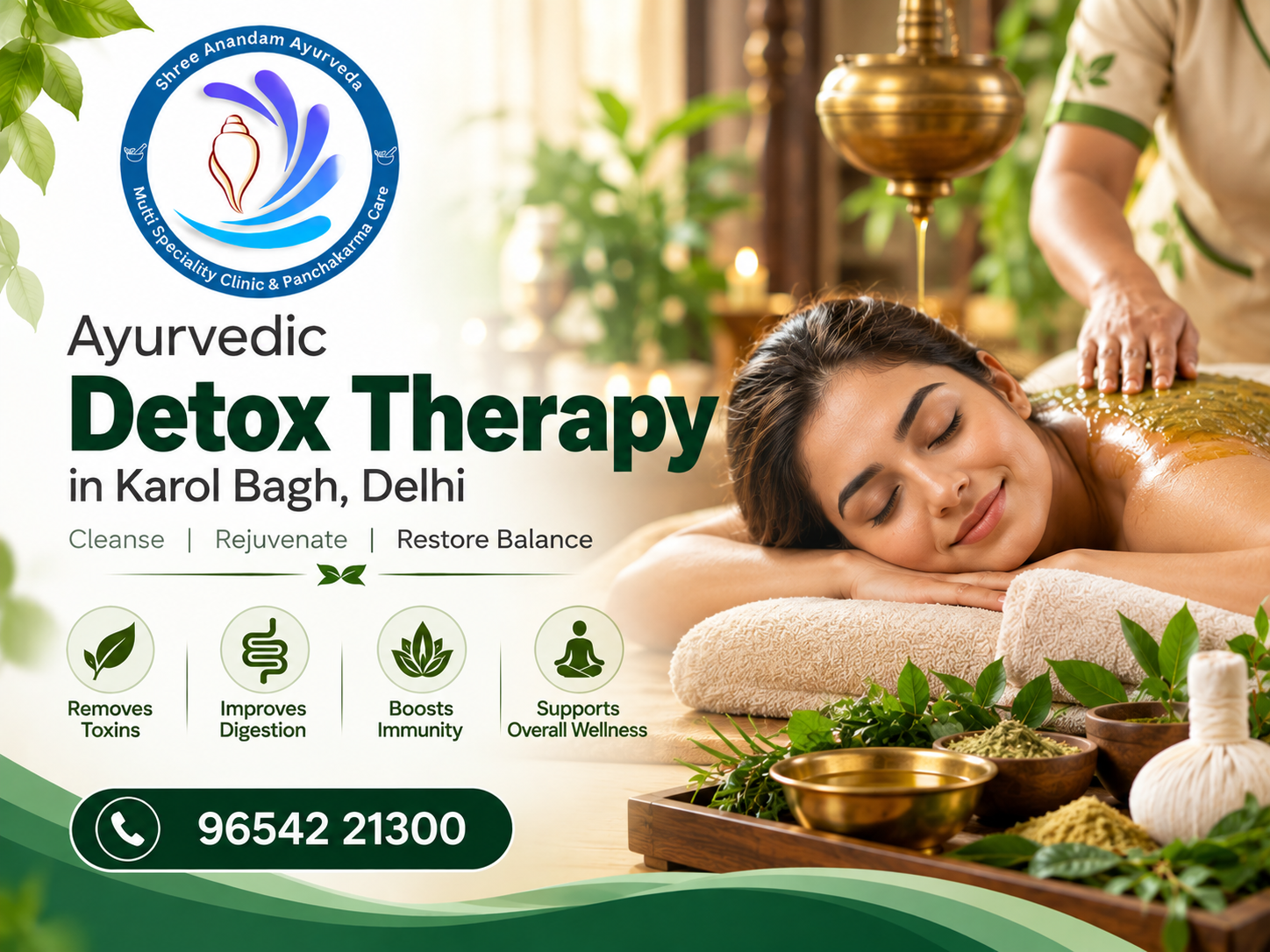
Ayurvedic Detox Therapy in Karol Bagh, Delhi
Ayurvedic detox therapy is a traditional wellness approach designed to support balance, healthy routines and overall wellbeing. In Ayurveda, cleansing and rejuvenation practices are selected according to an individual's constitution, lifestyle and health needs rather than following the same process for everyone.
At Shree Anandam Ayurveda, Ayurvedic detox therapy in Karol Bagh, Delhi is approached as an individualized wellness program. Depending on the assessment, the program may include traditional Ayurvedic therapies, dietary guidance, lifestyle recommendations and appropriate rejuvenation practices.
Some detox programs may involve selected Panchakarma procedures. However, Panchakarma is not appropriate for everyone and should only be undertaken after assessment by a qualified Ayurvedic practitioner.
What Is Ayurvedic Detox Therapy?
Ayurvedic detox therapy refers to a group of traditional practices intended to support the body's natural processes of balance and wellbeing. Ayurveda places importance on digestion, daily routine, nutrition, rest and lifestyle as part of maintaining overall health.
Traditional Ayurvedic cleansing programs may include dietary adjustments, external therapies, oil massage, fomentation and, when specifically indicated, selected Panchakarma procedures.
The appropriate approach depends on the individual's health, constitution, lifestyle and specific wellness goals.
Ayurvedic Perspective on Detoxification
Ayurveda traditionally discusses the accumulation of Ama, which is described in Ayurvedic literature in relation to impaired digestion and metabolism. Ayurvedic practitioners may consider digestive health, lifestyle, food habits and other individual factors when assessing the need for a cleansing or rejuvenation program.
Ayurvedic detoxification is therefore not simply a short-term cleansing routine. It may involve attention to food, digestion, sleep, daily routine, physical activity and appropriate traditional therapies.
The objective is to create a structured wellness routine that is appropriate for the individual rather than following an intensive detox program without professional assessment.
Types of Ayurvedic Detox & Cleansing Approaches
Depending on the individual's assessment, an Ayurvedic wellness program may include different traditional approaches.
1. Dietary & Lifestyle Reset
A simple and structured diet and daily routine may be recommended to support digestion, regularity and overall wellbeing.
2. Abhyanga Oil Massage
Ayurvedic Abhyanga is a traditional oil massage that may be incorporated into a wellness program to promote relaxation and general physical comfort.
3. Swedana / Herbal Fomentation
Selected forms of Ayurvedic fomentation may be used traditionally following appropriate assessment. The method and duration depend on the individual's requirements.
4. Panchakarma-Based Care
When clinically and traditionally appropriate, selected Panchakarma procedures may be incorporated into an Ayurvedic program. Panchakarma requires proper preparation, supervision and post-treatment care.
5. Rejuvenation & Wellness Care
Following an appropriate cleansing program, Ayurveda may emphasize nourishing food, healthy routines, rest and traditional rejuvenation practices.
Panchakarma & Ayurvedic Detox Therapy
Panchakarma is a traditional Ayurvedic therapeutic approach that involves selected procedures intended to support cleansing and balance. It is more structured than a general wellness detox and requires professional assessment.
Depending on the individual's requirements, a Panchakarma program may involve preparation, a selected therapeutic procedure and post-treatment dietary and lifestyle guidance.
Not every person requires all Panchakarma procedures. The procedures are selected according to the individual's Ayurvedic assessment and suitability.
Traditional Panchakarma Procedures
Vamana
Vamana is a traditional Panchakarma procedure involving therapeutic emesis under professional supervision. It is a specialized procedure and should only be considered after appropriate Ayurvedic assessment.
Virechana
Virechana is a traditional therapeutic purgation procedure. Its suitability, preparation and administration should be determined by a qualified Ayurvedic practitioner.
Basti
Basti is one of the traditional Panchakarma procedures involving the administration of selected Ayurvedic preparations through the rectal route. Different forms of Basti may be used according to traditional Ayurvedic assessment.
Nasya
Nasya is a traditional Ayurvedic procedure involving the administration of selected substances through the nasal route. It may be considered for specific indications after appropriate assessment.
Raktamokshana
Raktamokshana is a traditional Ayurvedic bloodletting procedure. Because it is a specialized intervention, it should only be performed when specifically indicated and by an appropriately trained practitioner.
Ayurvedic Detox Therapy Process
A structured Ayurvedic detox program generally begins with an assessment rather than immediately starting intensive therapies.
Step 1: Ayurvedic Consultation
The practitioner discusses your health history, lifestyle, food habits, sleep, digestion, physical activity and wellness goals.
Step 2: Individual Assessment
Traditional Ayurvedic assessment may consider factors such as Prakriti, Dosha balance, Agni, lifestyle and overall wellbeing.
Step 3: Preparation
If a more structured Ayurvedic cleansing program is appropriate, preparatory measures may be recommended before specific therapies.
Step 4: Selected Therapy
The practitioner may select suitable traditional therapies according to the individual's condition and requirements.
Step 5: Post-Therapy Guidance
Appropriate food, rest, daily routine and lifestyle guidance may be recommended after therapy to support a gradual return to a regular routine.
Potential Benefits of Ayurvedic Detox & Wellness Care
Ayurvedic detox and cleansing programs are traditionally used as part of a broader approach to wellbeing. Depending on the individual, the program may focus on:
- Supporting healthy digestive habits
- Encouraging a structured daily routine
- Supporting relaxation and physical wellbeing
- Promoting mindful eating habits
- Supporting healthy lifestyle practices
- Encouraging adequate rest and recovery
- Supporting overall balance and wellbeing
- Providing a structured wellness reset
Individual experiences and outcomes can vary. Ayurvedic detox should not be presented as a guaranteed method of removing toxins, curing disease or replacing medically necessary treatment.
Who May Consider Ayurvedic Detox Therapy?
An Ayurvedic wellness consultation may be considered by individuals who want to improve their daily routines, dietary habits and overall wellbeing through a traditional Ayurvedic approach.
- Individuals looking for a structured wellness routine
- People interested in Ayurvedic dietary guidance
- Individuals looking to improve healthy daily habits
- People interested in traditional Ayurvedic cleansing practices
- Individuals seeking relaxation and rejuvenation-focused wellness care
- People interested in exploring Panchakarma under professional supervision
An intensive detox or Panchakarma program is not suitable for everyone. A qualified Ayurvedic practitioner should determine whether a particular procedure is appropriate.
Ayurvedic Diet During a Detox Program
Food and digestion are important components of traditional Ayurvedic wellness programs. Depending on the individual's needs, a practitioner may recommend a simple and structured diet during different stages of the program.
General guidance may include:
- Freshly prepared and easily digestible meals
- Appropriate hydration
- Regular meal timings
- Moderation of heavily processed foods
- Appropriate use of spices according to individual needs
- Mindful eating habits
- Adequate rest and sleep
Specific dietary recommendations should be personalized rather than following a restrictive detox diet without professional guidance.
Lifestyle Guidance for Ayurvedic Detoxification
Detox-focused Ayurvedic care can also involve everyday habits that support general wellbeing. Depending on the individual's needs, guidance may include:
- Maintaining a consistent sleep schedule
- Following regular meal timings
- Maintaining appropriate physical activity
- Practicing relaxation techniques
- Managing unnecessary stress
- Maintaining personal hygiene and healthy routines
- Reducing excessive sedentary time
Abhyanga Massage as Part of Ayurvedic Wellness
Abhyanga is a traditional Ayurvedic oil massage that may be included in a wellness program before or after selected therapies, depending on the individual's requirements.
The therapy involves applying selected Ayurvedic oils using traditional massage techniques. It may support relaxation, physical comfort and a sense of wellbeing.
The appropriate oil, technique and duration should be selected according to individual assessment.
Rejuvenation After Ayurvedic Detox
Traditional Ayurveda places importance on appropriate post-therapy care. Following a cleansing-focused program, the practitioner may recommend nourishing food, adequate rest and a gradual return to regular activities.
Rejuvenation-focused practices may include suitable diet, lifestyle guidance, Abhyanga and other traditional therapies depending on the individual's condition.
The objective is to support a balanced transition back to a regular daily routine.
Is Ayurvedic Detox Therapy Suitable for Everyone?
No. The suitability of an Ayurvedic detox or Panchakarma program depends on the individual's health, age, medications, lifestyle and other factors.
Intensive cleansing procedures should not be undertaken without appropriate professional assessment. People who are pregnant, seriously unwell, recovering from surgery or managing significant medical conditions should discuss any Ayurvedic detox program with their healthcare professional.
If you are taking prescription medicines or receiving treatment for a chronic condition, inform both your healthcare professional and Ayurvedic practitioner before beginning a detox or Panchakarma program.
Ayurvedic Detox Therapy Near Karol Bagh, Delhi
Shree Anandam Ayurveda provides Ayurvedic consultation and traditional wellness therapies for individuals looking for Ayurvedic detox therapy near Karol Bagh, Delhi.
The clinic can also be convenient for individuals visiting from nearby areas of Central Delhi, including:
- Rajendra Nagar
- Old Rajendra Nagar
- New Rajendra Nagar
- Rajendra Place
- Patel Nagar
- East Patel Nagar
- West Patel Nagar
- Pusa Road
- Prasad Nagar
- Jhandewalan
- Dev Nagar
- Paharganj
Why Choose Shree Anandam Ayurveda for Detox Therapy?
- Personalized Ayurvedic consultation
- Individual-focused wellness planning
- Traditional Ayurvedic therapies
- Diet and lifestyle guidance
- Personalized cleansing and rejuvenation approach
- Traditional Panchakarma guidance where appropriate
- Convenient location for patients from Karol Bagh and nearby Central Delhi areas
Frequently Asked Questions About Ayurvedic Detox Therapy
What is Ayurvedic detox therapy?
Ayurvedic detox therapy refers to traditional Ayurvedic cleansing and wellness practices that may include dietary guidance, lifestyle changes, massage, fomentation and, when appropriate, selected Panchakarma procedures.
Is Ayurvedic detox the same as Panchakarma?
Not necessarily. Ayurvedic detox may refer broadly to cleansing and wellness practices, while Panchakarma is a more structured traditional Ayurvedic therapeutic approach involving specific procedures. Panchakarma requires professional assessment and supervision.
How long does Ayurvedic detox therapy take?
The duration varies depending on the type of program, the therapies selected and the individual's needs. A practitioner can recommend an appropriate schedule after consultation.
Can Abhyanga be included in a detox program?
Abhyanga may be included in some Ayurvedic wellness or cleansing programs. Whether it is appropriate depends on the individual's assessment and the overall structure of the program.
Is Panchakarma safe for everyone?
Panchakarma is not suitable for everyone or for every health condition. Individual procedures should be selected and supervised by a qualified Ayurvedic practitioner after appropriate assessment.
Can I take Ayurvedic detox treatment with other medicines?
If you are taking prescription medicines or undergoing medical treatment, inform your Ayurvedic practitioner before starting a detox or Panchakarma program. Appropriate professional guidance is important because some therapies or formulations may not be suitable in every situation.
Looking for Ayurvedic Detox Therapy in Karol Bagh?
If you are looking for Ayurvedic detox therapy in Karol Bagh, Delhi, you can schedule a consultation at Shree Anandam Ayurveda to discuss your health goals and explore an individualized Ayurvedic wellness approach.
If you have previous medical reports or details of ongoing medication, bring them to your consultation so the practitioner can better understand your overall health situation.
Book Your Instant Appointment Here!
Book Now!Our Treatments Process
Consultation and Diagnosis
Customized Therapy Planning
Ayurvedic Treatment Sessions
Continuous Monitoring & Improvement
Post-Treatment Lifestyle Guidance

Vaidya Sanghamitra Dash
Founder & Chief Ayurveda Consultant
We push the limits of what's possible for our patients.
Why Choose Shree Anandam Ayurveda for Ayurvedic Treatment?
Our patients are our priority — delivering authentic Ayurvedic care with proven clinical excellence and personalized healing approaches.
Shree Anandam Ayurveda is a trusted Ayurvedic healing centre and Panchakarma clinic in Delhi, known for its commitment to natural and result-oriented treatments. With years of clinical expertise, we focus on providing safe, holistic, and effective Ayurvedic solutions tailored to individual patient needs.
Our approach combines the wisdom of classical Ayurveda with modern clinical understanding to ensure accurate diagnosis and long-term healing. We specialize in treating the root cause of health issues through personalized therapies, herbal formulations, and lifestyle guidance.
At our centre, every patient receives detailed Ayurvedic assessment including Prakriti analysis, Nadi Pariksha, and customized treatment planning. Our goal is not just relief, but sustainable wellness and improved quality of life.

Azhaqiya Nambi
Google Review
Ananya Nayak
Google Review
Prabha Gupta
Google Review
Om Gupta
Google Review
Kanika Singhal
Google Review
Dinesh Tewary
Google Review
Richa Rani
Google Review
Radhika Sharma
Google Review
Anil Kumar
Google Review
Raj Sekhar Prusty
Google Review
Susanta Kumar Prusty
Google Review
Saim Siddiqui
Google Review
Sombir Sheoran
Google Review
 Google Reviews
Looking for consultation? +91-9654221300