
Ayurvedic Migraine & Depression Treatment in Karol Bagh, Delhi
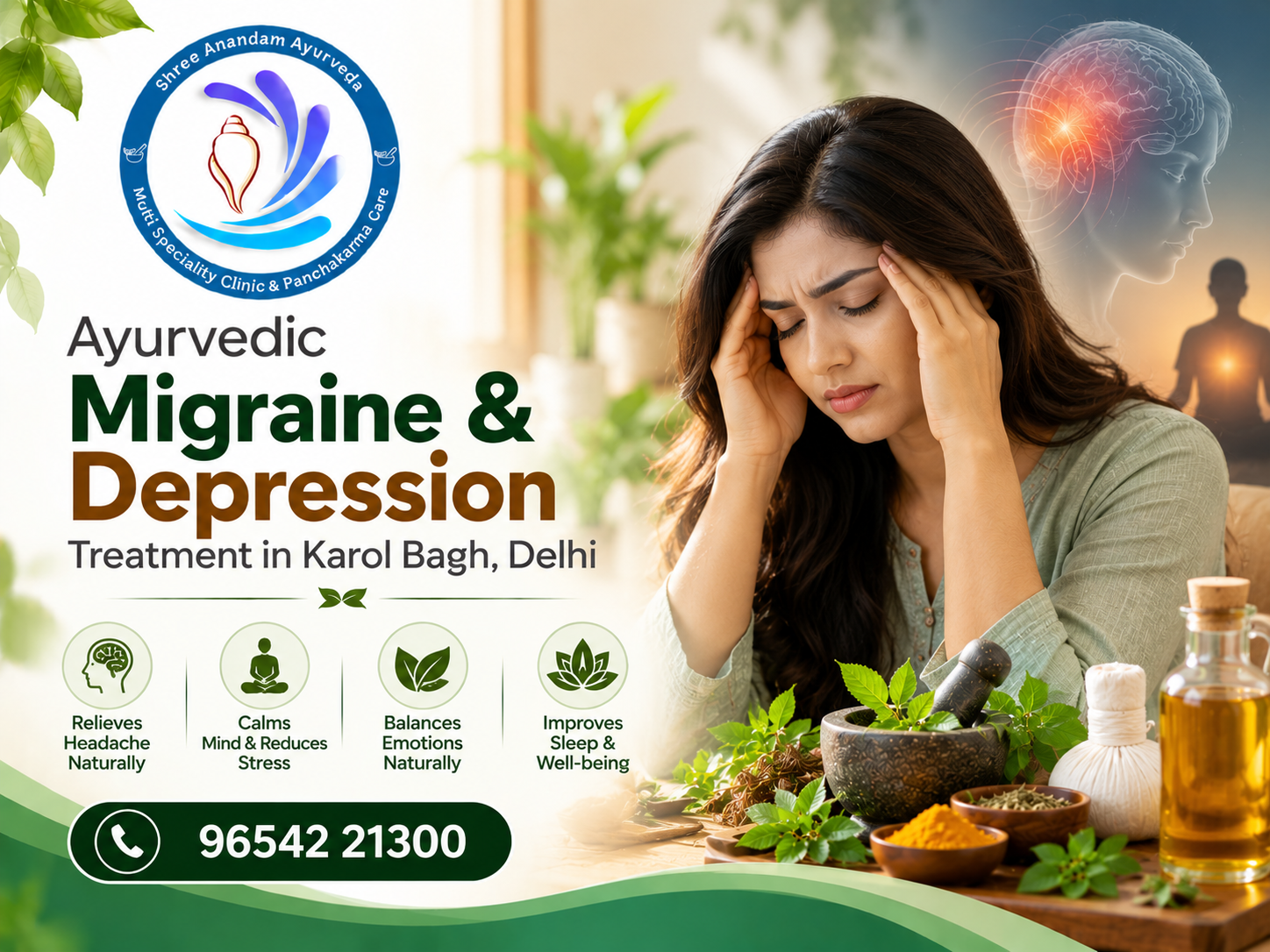
Ayurvedic Migraine & Depression Treatment in Karol Bagh, Delhi
Migraine and persistent emotional distress can affect daily routines, sleep, work, relationships and overall quality of life. Migraine may involve recurring headache attacks with symptoms such as nausea or sensitivity to light and sound, while depression can involve persistent low mood, loss of interest and changes in sleep, appetite or energy.
At Shree Anandam Ayurveda, Ayurvedic consultation for migraine and emotional wellbeing in Karol Bagh, Delhi focuses on understanding the individual's symptoms, lifestyle, diet, sleep, stress, digestion and overall health before developing a personalized wellness approach.
Traditional Ayurvedic principles and selected therapies may be considered as a complementary approach to support relaxation, healthy routines, stress management and overall wellbeing. The recommended approach depends on the individual's health history and professional assessment.
Migraine and depression can require appropriate medical or mental-health care. Ayurvedic wellness support should not replace prescribed treatment, emergency care or professional psychological or psychiatric support.
What Is Migraine?
Migraine is a neurological condition that can cause recurring headache attacks. The pain may be moderate to severe and can sometimes occur with nausea, vomiting or increased sensitivity to light and sound.
Migraine symptoms and triggers vary from person to person. Some individuals may experience warning symptoms known as aura before or during an attack, while others experience migraine without aura.
Common factors associated with migraine attacks may include changes in sleep, stress, dehydration, skipped meals, certain foods, hormonal changes, environmental factors and individual triggers.
Recurrent or severe headaches should be properly assessed so that migraine can be distinguished from other possible causes of headache.
Common Signs & Symptoms of Migraine
Migraine can present differently between individuals. Common symptoms may include:
- Moderate to severe headache
- Throbbing or pulsating head pain
- Nausea or vomiting
- Sensitivity to bright light
- Sensitivity to sound
- Increased sensitivity to smells
- Visual disturbances or aura in some people
- Fatigue or difficulty concentrating
New, unusually severe or changing headaches should be medically evaluated, particularly when accompanied by neurological symptoms or other warning signs.
What Is Depression?
Depression is a mental health condition that can involve persistent low mood, loss of interest or pleasure and changes in emotional, physical and cognitive functioning.
Depression is different from temporary sadness or occasional stress. Symptoms can affect sleep, appetite, energy, concentration, motivation and everyday activities.
Depression can have different causes and presentations. A qualified mental-health professional can help assess symptoms and determine appropriate care.
Ayurvedic wellness practices may be explored as complementary support for lifestyle and relaxation, but they should not be used as a substitute for evidence-based treatment of depression.
Common Signs & Symptoms of Depression
Depending on the individual, depression may involve several emotional, physical and behavioural changes, including:
- Persistent low mood
- Loss of interest or pleasure in activities
- Low energy or persistent fatigue
- Changes in sleep patterns
- Changes in appetite or weight
- Difficulty concentrating
- Feelings of hopelessness or worthlessness
- Reduced motivation
Persistent or significant symptoms should be discussed with a qualified mental-health professional. Early professional support can be important for recovery and ongoing wellbeing.
Ayurvedic Perspective on Migraine, Stress & Emotional Wellness
Traditional Ayurveda considers overall wellbeing through factors such as daily routine, sleep, digestion, diet, stress, physical activity and individual constitution.
Ayurvedic assessment may consider concepts such as Prakriti, Dosha balance, Agni, lifestyle patterns and mental wellbeing within the traditional Ayurvedic framework.
These concepts are part of traditional Ayurvedic practice and should not be interpreted as direct biomedical or psychiatric diagnoses.
At Shree Anandam Ayurveda, the consultation focuses on understanding the individual's concerns and developing an appropriate wellness plan rather than applying the same approach to every person.
Common Lifestyle Factors That May Affect Migraine & Wellbeing
Individual migraine triggers differ, but certain lifestyle factors can be relevant for some people. These may include:
- Irregular sleep patterns
- Skipping meals
- Inadequate hydration
- Prolonged stress
- Excessive screen exposure
- Changes in routine
- Individual food or environmental triggers
- Insufficient or disrupted sleep
Keeping a headache diary can help some people identify patterns between daily habits and migraine attacks.
Our Ayurvedic Approach to Migraine & Emotional Wellness
Ayurvedic care at Shree Anandam Ayurveda is individualized and may focus on lifestyle, relaxation, dietary habits and traditional wellness practices alongside appropriate medical care.
1. Detailed Consultation
The consultation may include discussion of headache patterns, sleep, food habits, hydration, stress, daily routine, previous treatments, medicines and relevant health history.
2. Ayurvedic Assessment
Traditional Ayurvedic assessment may consider Prakriti, Dosha balance, Agni, lifestyle, sleep and overall wellbeing.
3. Lifestyle Review
Daily routines, sleep schedules, physical activity, screen habits, stress and meal timings may be reviewed to identify practical areas for lifestyle improvement.
4. Dietary Guidance
Depending on individual needs, guidance may focus on regular meals, adequate hydration, balanced nutrition and identifying foods that appear to be associated with symptoms.
5. Relaxation & Traditional Therapies
Selected Ayurvedic therapies may be considered to support relaxation and general wellbeing when appropriate. The choice of therapy depends on the individual's health status and professional assessment.
6. Follow-Up
Follow-up consultations can help review lifestyle changes, migraine patterns, sleep quality and overall wellbeing and adjust the wellness plan when appropriate.
Ayurvedic Diet & Food Guidance for Migraine Wellness
Food-related migraine triggers differ between individuals. There is no universal migraine diet, so unnecessary food restrictions should be avoided.
Personalized dietary guidance may focus on:
- Eating meals at regular intervals
- Avoiding unnecessary meal skipping
- Maintaining adequate hydration
- Choosing balanced and nutrient-rich meals
- Limiting excessive intake of highly processed foods
- Observing individual food-related triggers
- Avoiding extreme fasting or restrictive diets
People with diabetes, kidney disease, gastrointestinal conditions or other medical conditions should receive individualized dietary guidance from an appropriate healthcare professional.
Lifestyle Management for Migraine & Emotional Wellbeing
Consistent daily routines may support general wellbeing and can be useful for people managing recurring migraine or stress-related concerns.
- Maintain a consistent sleep and wake schedule
- Stay adequately hydrated
- Eat meals at regular times
- Include appropriate physical activity
- Take regular breaks from prolonged screen use
- Practice suitable relaxation techniques
- Manage excessive daily stress where practical
- Maintain a balanced daily routine
Lifestyle changes should be gradual and practical. They should complement, rather than replace, appropriate medical or mental-health treatment.
Ayurvedic Therapies for Migraine & Relaxation
Selected traditional Ayurvedic therapies may be incorporated into an individualized wellness program where appropriate. Therapy selection depends on the person's assessment and health status.
Shirodhara
Shirodhara is a traditional Ayurvedic therapy involving the gentle flow of liquid over the forehead. It may be considered as part of a relaxation and wellbeing program when appropriate.
Abhyanga Massage
Abhyanga is a traditional Ayurvedic oil massage that may support relaxation, physical comfort and general wellbeing. Its suitability depends on the individual's condition.
Swedana
Selected traditional Ayurvedic fomentation therapies may be used in certain wellness programs. Heat-based therapies are not suitable for everyone and should be considered after appropriate assessment.
Panchakarma
Panchakarma is a structured traditional Ayurvedic therapeutic approach involving selected procedures. It should not be undertaken simply as a general detox and requires individualized professional assessment and supervision.
Ayurvedic therapies should not be used to delay appropriate medical evaluation for severe headaches, neurological symptoms or significant mental-health concerns.
Sleep Management for Migraine & Mental Wellness
Sleep and migraine can influence one another, and disrupted sleep may contribute to difficulties for some individuals. Consistent sleep habits can therefore form part of an overall wellness routine.
- Maintain regular sleep and wake times
- Create a comfortable and quiet sleep environment
- Reduce excessive screen use before bedtime
- Avoid unnecessary late-night meals or stimulants
- Use relaxation practices before sleep where appropriate
- Address persistent sleep problems professionally
Stress Management & Emotional Wellness
Stress can affect sleep, daily routines and overall wellbeing. For some people, periods of significant stress may also coincide with changes in migraine frequency.
Supportive practices may include:
- Breathing and relaxation exercises
- Mindfulness-based practices
- Regular physical activity
- Maintaining healthy social connections
- Following a consistent daily routine
- Taking appropriate breaks during demanding work
These practices can support general wellbeing but should not be considered a substitute for professional treatment of depression or other mental-health conditions.
Who May Consider Ayurvedic Consultation for Migraine & Stress?
An Ayurvedic consultation may be considered by individuals who want to explore traditional dietary, lifestyle and relaxation approaches alongside appropriate healthcare.
- Individuals experiencing recurring migraine and seeking lifestyle guidance
- People interested in identifying possible lifestyle-related headache triggers
- Individuals experiencing stress or disrupted daily routines
- People looking for traditional relaxation and wellness practices
- Individuals interested in personalized Ayurvedic dietary guidance
- People seeking complementary wellness support alongside appropriate treatment
People experiencing depression or persistent emotional symptoms should also receive appropriate assessment and care from a qualified mental-health professional.
Importance of Medical Evaluation for Migraine & Depression
Recurring migraine and depression can have different causes and may require different forms of professional treatment. A proper assessment helps determine the appropriate management approach.
Depending on the situation, healthcare professionals may recommend neurological evaluation, headache management, psychological therapy, psychiatric treatment, medication or other appropriate interventions.
Ayurvedic lifestyle and wellness guidance can be considered complementary, but it should not replace prescribed medication, psychotherapy, neurological care or psychiatric care.
When Should You Seek Medical Attention?
A headache that is sudden, unusually severe, significantly different from previous headaches or associated with neurological symptoms requires prompt medical evaluation.
Seek urgent medical attention if a severe headache occurs with symptoms such as weakness, difficulty speaking, confusion, fainting, seizures, significant vision changes, high fever, stiff neck or other serious neurological symptoms.
Depression also requires professional attention when symptoms are persistent, severe or significantly affecting everyday life.
If someone is experiencing thoughts of self-harm or suicide, seek immediate emergency or crisis support and stay with the person if it is safe to do so. Ayurvedic treatment should never delay emergency mental-health care.
Ayurvedic Migraine & Depression Treatment Near Karol Bagh, Delhi
Shree Anandam Ayurveda provides Ayurvedic consultation and traditional wellness guidance for individuals looking for migraine and emotional wellness support near Karol Bagh, Delhi.
The clinic can also be convenient for individuals visiting from nearby areas of Central Delhi, including:
- Rajendra Nagar
- Old Rajendra Nagar
- New Rajendra Nagar
- Rajendra Place
- Patel Nagar
- East Patel Nagar
- West Patel Nagar
- Pusa Road
- Prasad Nagar
- Jhandewalan
- Dev Nagar
- Paharganj
Why Choose Shree Anandam Ayurveda for Migraine & Wellness?
- Personalized Ayurvedic consultation
- Individual-focused wellness planning
- Personalized dietary and lifestyle guidance
- Traditional Ayurvedic therapies where appropriate
- Focus on sleep, stress and overall wellbeing
- Individual assessment rather than a one-size-fits-all approach
- Convenient location for individuals from Karol Bagh and nearby Central Delhi areas
Frequently Asked Questions About Ayurvedic Migraine & Depression Treatment
Can Ayurveda help with migraine?
Ayurvedic lifestyle guidance and selected traditional wellness practices may be considered as complementary support for people experiencing migraine. Recurrent migraine should be appropriately diagnosed and medically managed.
What is the Ayurvedic approach to migraine?
The Ayurvedic approach may include individualized dietary guidance, sleep and lifestyle management, stress-reduction practices and selected traditional therapies where appropriate. The approach varies according to the individual's assessment.
Can Ayurveda treat depression?
Ayurvedic lifestyle and relaxation practices may be considered complementary wellness support, but depression requires appropriate professional mental-health assessment and treatment. Ayurvedic care should not replace psychotherapy, psychiatric care or prescribed medicines.
Can Shirodhara be used for migraine?
Shirodhara is a traditional Ayurvedic therapy that may be considered as part of a relaxation and wellbeing program for selected individuals. Its suitability should be assessed individually and it should not be presented as a guaranteed treatment for migraine.
What lifestyle habits may help with migraine?
Maintaining regular sleep, adequate hydration, consistent meal timings, appropriate physical activity and identifying individual triggers may support migraine management. A headache diary can also help identify personal patterns.
Can I take Ayurvedic medicines with migraine or depression medicines?
If you are taking prescription medicines for migraine, depression or another medical condition, inform both your Ayurvedic practitioner and treating healthcare professional before starting an Ayurvedic medicine or herbal formulation. Some products can interact with medicines.
When should I see a doctor for migraine?
New, sudden, unusually severe or changing headaches should be medically evaluated. Urgent assessment is particularly important when headache occurs with neurological symptoms, seizures, fainting, confusion, severe fever, stiff neck or significant vision changes.
Is Panchakarma recommended for migraine?
Panchakarma is not automatically appropriate for every person with migraine. Any Panchakarma procedure should be considered only after individualized assessment and under appropriate professional supervision.
Looking for Ayurvedic Migraine & Wellness Support in Karol Bagh?
If you are looking for Ayurvedic migraine treatment and wellness support in Karol Bagh, Delhi, you can schedule a consultation at Shree Anandam Ayurveda to discuss your headache patterns, lifestyle, sleep, diet and overall wellbeing.
If you have previous neurological reports, headache records, prescription details or information about ongoing medicines, you may bring them to your consultation so the practitioner can better understand your health history.
Book Your Instant Appointment Here!
Book Now!Our Treatments Process
Consultation and Diagnosis
Customized Therapy Planning
Ayurvedic Treatment Sessions
Continuous Monitoring & Improvement
Post-Treatment Lifestyle Guidance

Vaidya Sanghamitra Dash
Founder & Chief Ayurveda Consultant
We push the limits of what's possible for our patients.
Why Choose Shree Anandam Ayurveda for Ayurvedic Treatment?
Our patients are our priority — delivering authentic Ayurvedic care with proven clinical excellence and personalized healing approaches.
Shree Anandam Ayurveda is a trusted Ayurvedic healing centre and Panchakarma clinic in Delhi, known for its commitment to natural and result-oriented treatments. With years of clinical expertise, we focus on providing safe, holistic, and effective Ayurvedic solutions tailored to individual patient needs.
Our approach combines the wisdom of classical Ayurveda with modern clinical understanding to ensure accurate diagnosis and long-term healing. We specialize in treating the root cause of health issues through personalized therapies, herbal formulations, and lifestyle guidance.
At our centre, every patient receives detailed Ayurvedic assessment including Prakriti analysis, Nadi Pariksha, and customized treatment planning. Our goal is not just relief, but sustainable wellness and improved quality of life.

Azhaqiya Nambi
Google Review
Ananya Nayak
Google Review
Prabha Gupta
Google Review
Om Gupta
Google Review
Kanika Singhal
Google Review
Dinesh Tewary
Google Review
Richa Rani
Google Review
Radhika Sharma
Google Review
Anil Kumar
Google Review
Raj Sekhar Prusty
Google Review
Susanta Kumar Prusty
Google Review
Saim Siddiqui
Google Review
Sombir Sheoran
Google Review
 Google Reviews
Looking for consultation? +91-9654221300